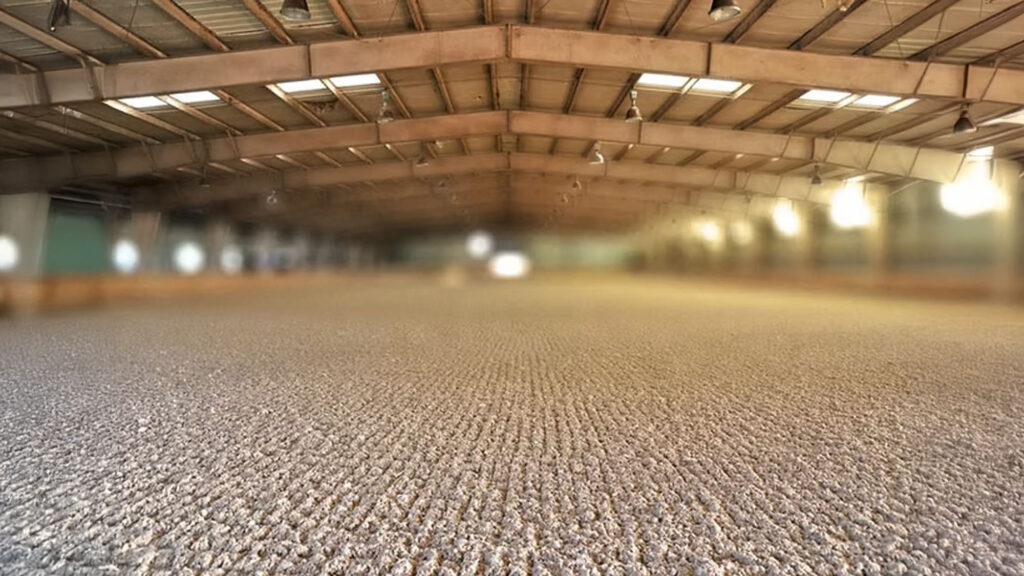
Even a well-designed arena can develop problems if the footing is not managed correctly. Small missteps in construction, maintenance, or material selection can affect how the arena rides and how long it lasts. Knowing the most common footing mistakes makes it easier to protect both performance and your investment.
The base is the foundation of the arena, yet it is often treated as an afterthought. If it is not properly graded, compacted, and prepared for drainage, the footing layer above it will struggle to perform. That can lead to uneven spots, soft areas, and faster surface breakdown.
A properly built base supports the footing and helps the arena stay more consistent. It also improves drainage and reduces the chance of long-term damage. Without that support, the surface will likely require more frequent correction.
Footing should always match the arena’s purpose. A surface that works well for dressage may not be ideal for jumping, western riding, or everyday school use. If the footing does not fit the discipline, the arena may feel too deep, too hard, or too unstable.
Climate and maintenance habits also matter. Some materials perform better in dry weather, while others hold up more effectively in wet conditions. Choosing the right footing helps the arena stay safer and more predictable.
Drainage is one of the most important parts of arena performance. When water cannot move away from the surface, it can collect in low spots, weaken the footing, and create inconsistent ride quality. Wet areas may ride heavier, while drier sections feel firmer and less forgiving.
Poor drainage can also shorten the life of the arena. Moisture that lingers too long can damage both the footing and the base. Planning for water movement from the beginning helps prevent those problems.
Footing changes over time, especially in high-use arenas. If the surface is not dragged, watered, and monitored regularly, it can compact in some areas and loosen in others. That inconsistency can affect horse movement and rider confidence.
Routine maintenance helps keep the footing level and responsive. It also gives facility owners a chance to spot problems early. A steady maintenance plan is one of the easiest ways to preserve footing quality.
Small footing problems rarely stay small. A soft patch, drainage issue, or uneven section can quickly spread if it is left alone. Waiting too long to make repairs often increases the cost and complexity of the fix.
Addressing problems early helps protect the entire arena. It can also prevent downtime and reduce the chance of bigger structural damage. Quick action usually saves both time and money.
The best arena footing is the result of smart planning and consistent care. When the base, drainage, footing material, and maintenance all work together, the surface stays safer and more reliable. Avoiding these common mistakes helps extend the life of the arena and improve daily ride quality.