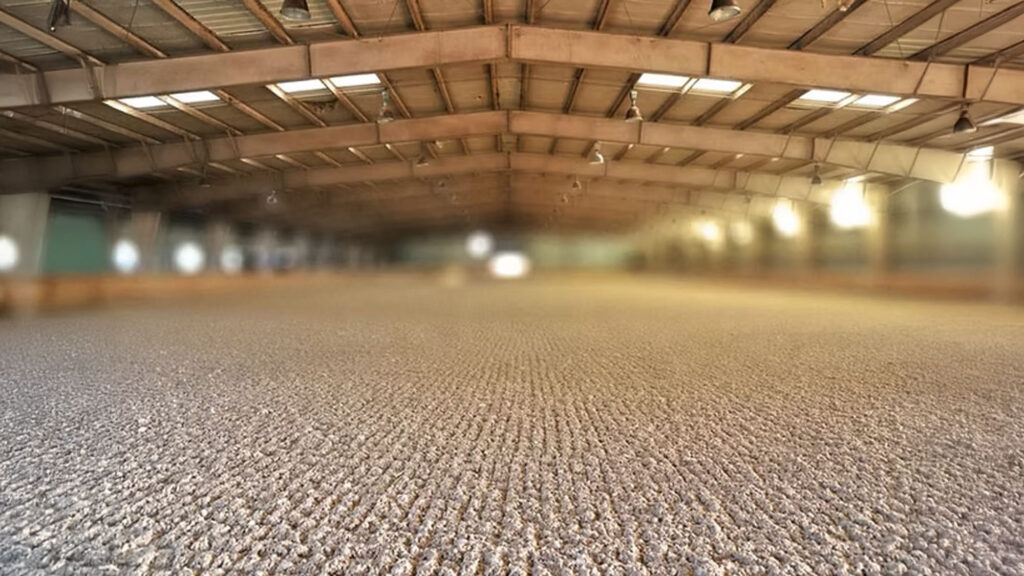
Is your riding arena getting dustier, feeling harder, or developing uneven spots? These changes can make you question whether your footing has reached the end of its useful life. But replacing the entire surface is not always the right first step.
Footing problems can come from inconsistent moisture, displaced material, poor drainage, or a maintenance routine that no longer matches the arena’s workload. Identifying the cause helps you decide whether your surface needs an adjustment, a targeted refresh, or full replacement.
Before replacing footing for horse arenas, work through these six checks.
An arena can look reasonably level while having different footing depths beneath the surface. Material may shift away from busy areas and accumulate elsewhere, leaving some sections shallow and others too deep.
Check multiple locations, including:
Shallow footing can leave the base exposed or create a firmer feel. Excessively deep footing can require horses to work harder to move through the material. The goal is a consistent depth suited to your footing blend and riding discipline—not simply adding more material wherever the surface looks low.
If the existing footing has shifted, redistribution may help restore consistency. If you suspect a low spot comes from the base, have it evaluated before topping it up. Extra footing will not correct an underlying base problem.
A dusty arena does not automatically need new footing. First, check whether your watering routine provides consistent coverage and whether the surface retains moisture evenly.
Look for dry corners, areas that dry much faster than others, and wet patches that remain after the rest of the arena has dried. Too little moisture can increase dust and reduce cohesion, while excessive moisture can leave areas slick or unstable.
Ask yourself:
Persistent problems deserve a closer look at the footing materials as well as the watering system. GGT Footing textile fibers and blends are designed to work with compatible sand to support moisture retention, stability, and cushion. However, the existing sand and the arena’s maintenance capabilities should be evaluated before choosing an additive.
If puddles, soft spots, or recurring low areas keep returning, the problem may extend below the riding surface.
The base and drainage system support how the footing performs. Poor drainage can leave the arena saturated, weaken the base, and contribute to uneven conditions. Replacing the top layer without addressing these issues may leave you dealing with the same problems again.
After rainfall, observe:
Clear accessible debris from drainage routes and seek an arena professional’s assessment when problems persist. Textile additives can improve a compatible footing system, but they cannot compensate for inadequate drainage or poor base construction.
Before adding fresh material, find out whether the existing sand is still suitable for the surface you want.
Sand varies in particle size, shape, drainage behavior, and compaction characteristics. Those differences affect how an arena holds moisture, supports movement, and responds to maintenance. A blend that works well in one arena may not suit another arena’s discipline, climate, or workload.
Look for changes such as:
These signs call for an evaluation rather than an automatic top-up. Some arenas can benefit from rebalancing compatible materials, while others may need unsuitable or deteriorated material replaced. GGT Footing can help evaluate the existing sand and determine whether a textile addition is appropriate.
The key is compatibility: adding a new product should address a specific need, not simply cover up an unresolved problem.
Before deciding the footing is worn out, check how it is being maintained.
Regular grooming helps redistribute material and manage uneven wear. But the equipment and settings need to match the surface. Dragging too deeply can disturb the base, while insufficient grooming can allow compaction and unevenness to develop.
Review these maintenance details:
For GGT Footing surfaces, appropriate grooming helps keep textile fibers integrated with the sand. If your arena’s use has increased, the maintenance schedule may also need to change. Addressing equipment settings and grooming practices is worth doing before investing in replacement material.
The final check is whether the surface responds to appropriate maintenance and corrections.
Record where problems occur, what adjustments you make, and whether those changes improve consistency. For example, does redistributing material correct shallow areas? Does more even watering reduce dry patches? Do the same low spots return despite surface leveling?
Recurring problems after suitable maintenance can indicate that the footing, base, or overall system needs a more substantial intervention. Increased dust, persistent compaction, loss of cushion or stability, and material separation are all reasons to seek a professional assessment.
Also consider whether the arena still matches your needs. A surface supporting more horses, different disciplines, or a heavier training schedule may require adjustments to its blend and maintenance plan—not necessarily a like-for-like replacement.
Replacing footing for horse arenas should follow an evaluation of the whole system: the sand, additives, depth, moisture, maintenance, base, and drainage.
A targeted refresh may be appropriate when the existing materials remain suitable and the main issues involve distribution, moisture management, or blend balance. More extensive work may be needed when unsuitable materials or underlying construction problems prevent consistent performance.
At GGT Footing, we help arena owners evaluate their existing surfaces and explore options suited to their sand, riding discipline, and maintenance needs. Contact our team to discuss whether your arena could benefit from a compatible textile blend, a footing adjustment, or a more comprehensive renovation.