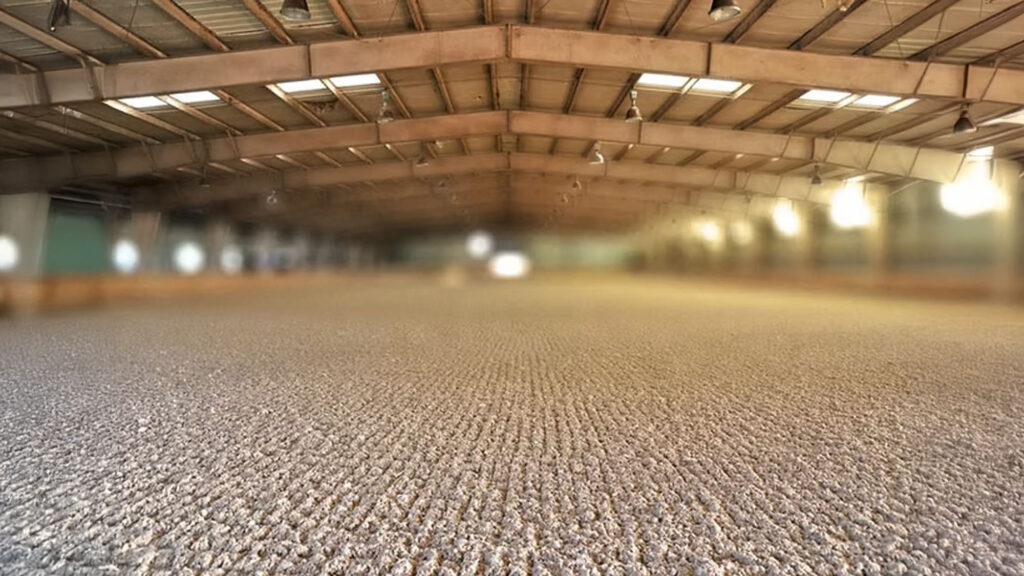
As your training program evolves, your arena needs often change with it. Young horses become competition partners, lesson programs expand, and new disciplines may be introduced. Planning how your arena can grow over time helps you avoid costly redesigns and ensures your footing continues to support your goals.
Many facilities begin with a modest arena that fits their current horse numbers and training schedule. That approach is practical, but it works best when paired with a long-term vision.
Leaving room for extended length or width, or even a warm-up area later on, can save major site-work costs down the road.
Right-sizing your arena is about balancing available space, budget, and training demands. A smaller arena can be very effective for flatwork and basic schooling, but certain disciplines require more room.
Even if your initial build is compact, thoughtful planning makes future expansion smoother and more cost-effective.
Footing should support both your current work and the type of riding you expect to do more of in the future. When planning for growth, it helps to think of footing as something that can be upgraded in stages rather than all at once.
This staged approach lets you build a functional arena now, while keeping the door open for performance-oriented footing as your demands increase.
No matter how your program grows, a strong base and effective drainage remain essential. Investing in these structural elements early allows your surface to handle increased traffic and evolving footing needs.
Before changing or upgrading footing, it is helpful to evaluate whether your existing base is performing effectively and can support future demands.
Growth doesn’t always mean a larger footprint—sometimes it means adding or refining features around the arena to better support daily work.
These incremental improvements help your arena keep pace with your program, improving safety, consistency, and efficiency without requiring a complete rebuild.
Designing an arena that can grow with your program is about strategy rather than scale. By planning for future size, footing upgrades, and structural needs, you create a surface that supports both where you are now and where you want to go.
A thoughtful approach to layout, base construction, drainage, and footing selection helps ensure that as your horses and riders progress, your arena remains a reliable, adaptable training environment.