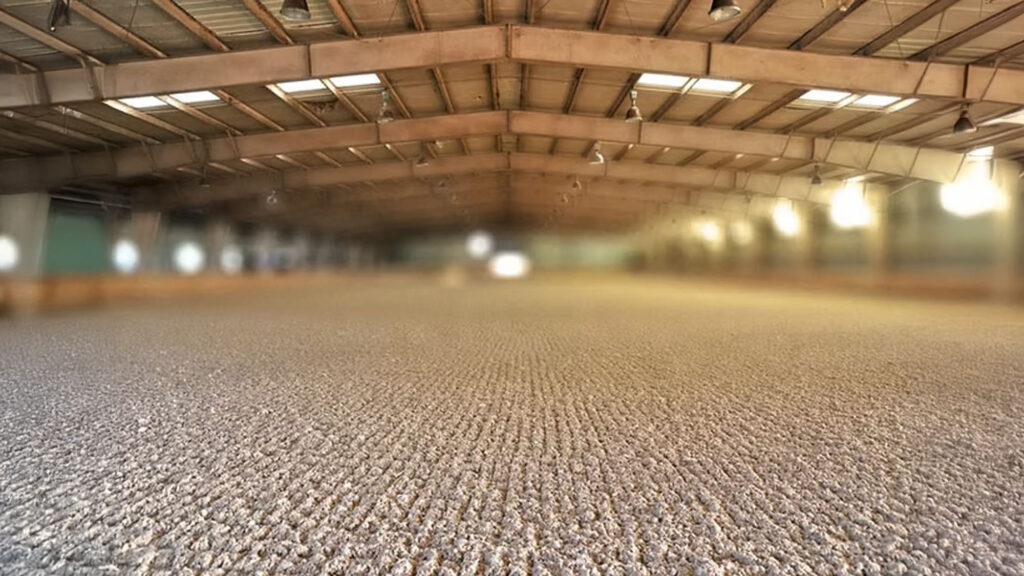
When your arena needs to handle dressage tests in the morning, jumping lessons in the afternoon, and schooling rides in between, the footing has to do a lot of jobs well. A thoughtfully designed multi-discipline arena balances grip, cushioning, and stability so horses can perform confidently no matter the exercise.
A reliable base is the foundation of any multi-use arena. It must be well-compacted, properly graded, and engineered for efficient drainage so the surface rides consistently in different weather conditions. When the base is even and stable, it supports a uniform footing depth that works for everything from collected work to powerful takeoffs and landings.
In a shared arena, footing can’t be too deep for flatwork or too firm for jumping. Aim for a balanced surface that offers:
High-quality sand combined with textile additives is a popular choice because it can be tuned to provide both support and elasticity across disciplines.
Moisture control is critical in a multi-discipline arena, where different types of work put varied stress on the surface. Properly watered footing offers better traction, reduced dust, and more predictable footing depth. Whether you use sprinklers, a watering cart, or more advanced systems, the goal is to keep moisture as even as possible from rail to center so every ride feels the same.
Because multi-discipline arenas see a wide range of patterns—circles, lateral work, jump approaches—grooming must be both regular and strategic. Using the right drag for your footing type, focus on:
A simple grooming schedule, adjusted to how heavily the arena is used, goes a long way toward preserving performance.
How you set up the arena itself can support multi-discipline use. Thoughtful design might include:
This allows trainers and riders to share the space more easily, without over-stressing specific sections of the surface.
Over time, a multi-discipline arena will reveal where it needs support—perhaps corners that get deep, lines that compact, or drainage that struggles after storms. These signs can indicate it’s time to:
Working with a footing specialist helps match any upgrades to your arena’s actual use, so the surface continues to serve everyone—from dressage riders to jumpers and everyday riders—on that one, hard-working arena.