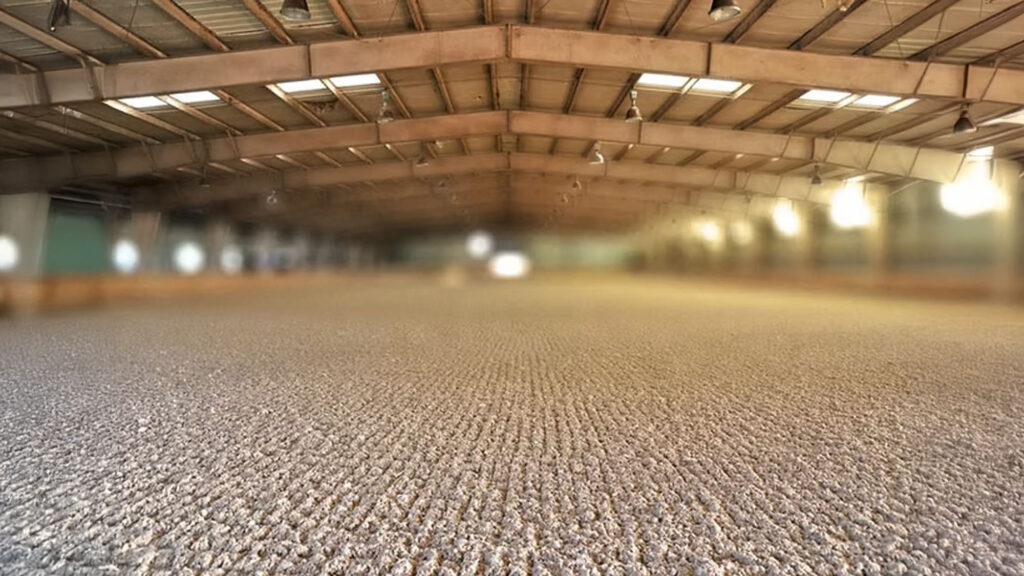
Arena footing does more than influence how a surface looks or feels. It also plays a major role in how a horse’s body absorbs impact, maintains balance, and moves comfortably across the arena. For facilities looking to improve performance while supporting equine health, base mats can be an important part of the footing system.
Base mats are designed to create a more stable and supportive foundation beneath the riding surface. When used correctly, they can help reduce stress on joints and soft tissue by improving shock absorption, supporting consistency, and helping the footing perform more predictably over time.
A horse’s comfort and soundness are affected by everything beneath the footing surface, not just the material riders see on top. If the base is uneven, unstable, or too hard, the horse may experience more concussion with every step. That added impact can place unnecessary strain on joints, tendons, ligaments, and soft tissue.
A well-built base gives the footing a stronger foundation to rest on. When base mats are added to that system, they help distribute force more evenly and create a more forgiving surface. This can make a meaningful difference in how the arena rides and how the horse moves through it.
Base mats are typically installed between the prepared base and the top footing layer. Their job is to support the surface above while helping manage impact and pressure from hoof traffic. Instead of allowing all the force of each step to transfer directly into the hard base below, the mats help absorb and spread that pressure more efficiently.
That added layer of support can improve the horse’s experience in several ways. It can help reduce harshness, improve comfort, and contribute to a more uniform riding surface. In arenas where horses work frequently or at higher intensity, that kind of support can be especially valuable.
One of the biggest benefits of base mats is the balance they provide between cushion and stability. Horses need enough support to avoid sinking too deeply, but they also need enough give to reduce concussion. Base mats help create that middle ground by improving how the arena absorbs and returns energy.
When the footing is too hard, the joints can take more repeated impact. When it is too soft or inconsistent, the horse may work harder to stabilize each step. Base mats help create a more reliable surface, which can support healthier movement and more comfortable work sessions.
Soft tissue structures like tendons and ligaments are especially sensitive to repetitive strain and uneven footing. A surface that changes too much from one area to another can increase the risk of overloading these structures. Base mats help reduce those inconsistencies by creating a more even foundation across the arena.
This is particularly important for horses in training, competition, or rehabilitation. A more predictable surface allows the horse to move with greater confidence and less unnecessary effort. Over time, that can help support better tissue protection and reduce wear from repeated use.
Base mats do not just benefit the horse; they also improve how the arena footing performs. A more stable base can help the top layer stay more consistent in depth and distribution. That means fewer hard spots, fewer irregular low areas, and a more uniform ride across the surface.
This consistency matters for both safety and performance. Riders can trust the arena more, and horses can work in a surface that behaves more predictably. When the footing performs well, it becomes easier to maintain the kind of ride quality that supports training goals and everyday use.
Base mats are especially useful in arenas that need extra support due to drainage concerns, heavy use, or challenging soil conditions. They can also be a smart choice for facilities that want to improve comfort without rebuilding the entire arena from scratch. In the right setting, they offer a practical way to strengthen the foundation of the surface.
They are often a strong option for private farms, training facilities, and competition venues that want to improve long-term footing quality. If the arena already has a well-prepared base but needs more cushioning or consistency, base mats can be an effective upgrade.
While base mats are an upfront investment, they can provide long-term value by helping protect both the footing and the horses using it. A more stable surface may require fewer corrections over time and support better overall arena performance. That can mean less maintenance stress and a better return on the original footing investment.
For facility owners, the goal is often to create a surface that feels good, lasts well, and supports horse health. Base mats can help achieve that balance by improving the foundation beneath the rideable surface. When the base is stronger, the entire arena system is more likely to perform at a higher level.
Protecting equine joints and soft tissue starts with the surface beneath the horse. Base mats help create a more supportive, consistent, and forgiving footing system that can reduce harsh impact and improve overall ride quality. For arenas where performance and horse comfort both matter, they are a valuable part of the equation.