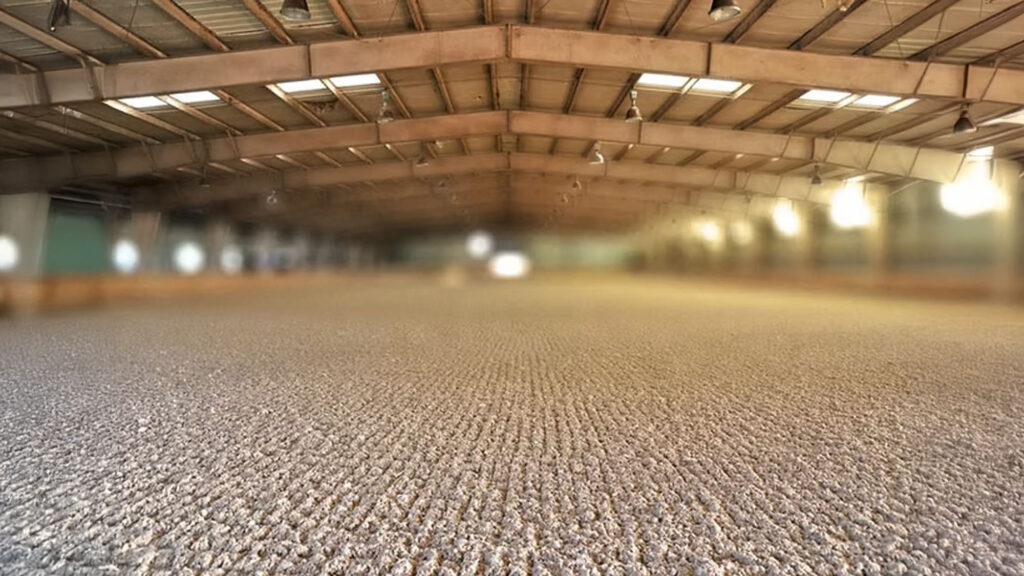
Choosing the best footing for your horse arena starts with understanding what high-quality footing should actually do. The right surface should support your horse’s movement, stay consistent under repeated use, and create a safe, dependable ride every day. Instead of focusing only on material type, it helps to look closely at the qualities that separate average footing from a truly effective arena surface.
Good footing does more than cover the ground. It should create a balanced riding surface that supports traction, cushioning, and stability without becoming too deep, too firm, or too loose.
High-quality footing should:
When footing performs well in these areas, it helps both horse and rider stay more relaxed and productive.
One of the clearest signs of quality footing is consistency. A well-made surface should feel the same from one part of the arena to another. If some areas are heavy, slippery, or hard-packed while others are loose or dusty, the footing is not working as it should.
Consistency matters because it helps horses trust the surface beneath them. That trust leads to better balance, more confident movement, and fewer interruptions in training.
The best footing offers secure traction without creating resistance. If a surface is too loose, horses may struggle to push off effectively. If it is too firm or sticky, they may feel restricted or jarred.
Quality footing should support natural movement by giving horses enough grip to turn, stop, and land safely. This balance is especially important in arenas used for jumping, dressage, or frequent schooling.
Another important quality to look for is cushioning. A good arena surface should absorb impact so your horse’s joints, tendons, and muscles are not taking unnecessary stress with every stride.
At the same time, footing should not feel overly soft or unstable. The right surface cushions impact while still giving horses support underneath, which helps promote healthier movement over time.
High-quality footing should keep performing even after repeated riding, dragging, and watering. Some materials break down quickly, separate easily, or lose their structure after heavy use. When that happens, the footing becomes harder to maintain and less reliable for daily training.
Look for footing that is built to last and designed to keep its shape over time. Durable footing saves time, supports consistency, and helps protect your investment in the arena.
Before selecting a footing system, ask a few practical questions:
These questions make it easier to judge footing quality based on performance, not just appearance.
The best footing for horse arenas is not simply the most popular option or the least expensive one. It is the surface that offers dependable quality, supports horse and rider confidence, and performs well day after day.
When you know what to look for, it becomes much easier to choose footing that delivers real value. A better arena surface leads to better rides, better training, and a better long-term foundation for your horses.