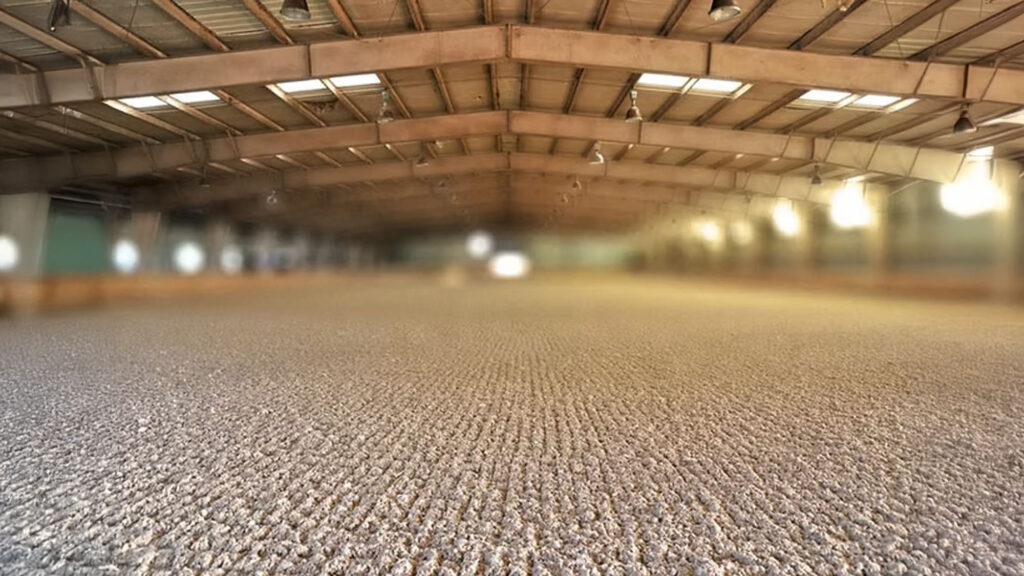
Most riders notice their footing when something feels off—a sticky turn, a flat jump, a landing that feels heavier than it should. What’s less obvious is how much of that experience is shaped not by the footing itself, but by how it’s maintained.
At the center of that maintenance is one often-overlooked tool: the arena drag.
A well-maintained arena doesn’t call attention to itself. It rides the same in every corner, supports every stride, and allows horses to move with confidence. That level of consistency is not accidental—it’s engineered through routine, intentional dragging.
Each pass of an arena drag redistributes material, resets compaction, and rebalances the surface. In footing systems like GGT Footing, this process is even more critical. The textile fibers are designed to work in harmony with sand, creating a surface that offers both stability and elasticity—but only when properly maintained.
Dragging is what keeps that balance intact.
Instead of thinking of dragging as a scheduled task, it helps to think of it as a response to what your arena is showing you.
For example:
In each case, the solution isn’t just more dragging—it’s smarter dragging.
Many arenas are dragged frequently but not effectively. The difference comes down to technique.
Dragging the same pattern every time can create predictable wear zones. Over time, this leads to inconsistencies that affect performance, especially in disciplines like jumping where precision matters.
Instead, effective dragging involves:
With GGT Footing, this becomes especially important. The goal is not to “fluff” the surface, but to maintain a consistent blend that supports both grip and rebound.
One of the biggest misconceptions is that more dragging always equals better footing. In reality, over-dragging can be just as damaging as neglect.
Dragging too deep or too aggressively can separate materials, disrupt the base, and reduce the performance benefits of advanced footing systems. On the other hand, insufficient dragging allows compaction and unevenness to take hold.
The sweet spot lies in consistency, observation, and adjustment.
For competitive riders and high-traffic facilities, dragging should be viewed as part of performance management—not just maintenance.
A properly dragged arena:
In this sense, your drag is not just grooming the arena—it’s shaping every ride that happens within it.
High-quality footing like GGT Footing is designed to perform at a higher level, but it requires a more intentional approach to maintenance. The difference shows up not just in how the arena looks, but in how it rides.
When dragging becomes a thoughtful, responsive process rather than a routine chore, the result is a surface that truly supports performance—from the first ride of the day to the last.
Level up your arena care routine by contacting us today.