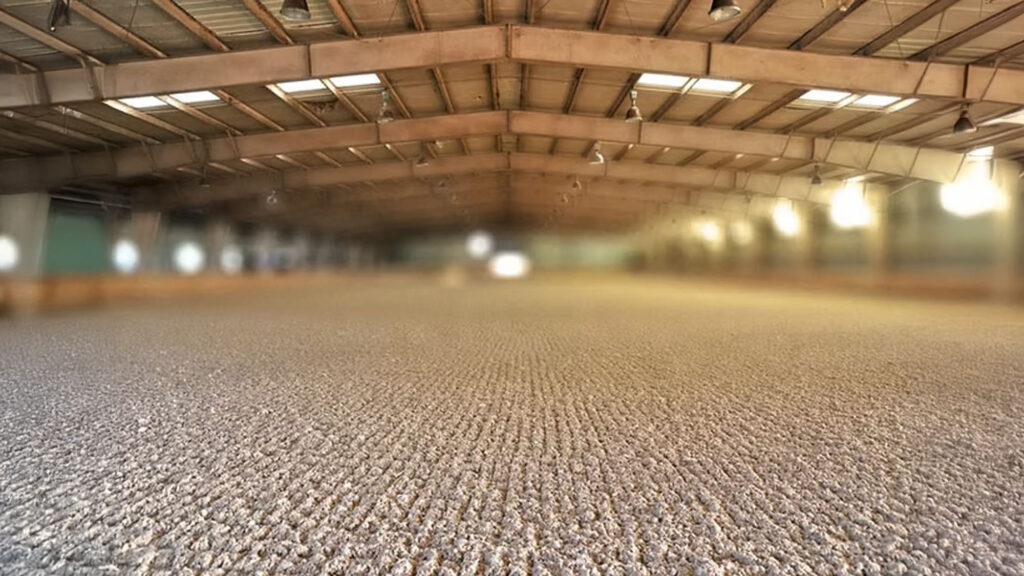
Even the best horse arena footing can lose its performance when common mistakes go unchecked. What starts as a small maintenance issue can lead to inconsistent ride quality, reduced traction, and a surface that no longer supports horses the way it should. The good news is that many of these problems are preventable with the right care and attention.
Understanding what damages footing is the first step toward protecting it. From poor moisture management to overworking the surface, the same few missteps tend to show up again and again in arenas that stop performing as intended. With a little planning, you can help preserve safety, consistency, and long-term value.
Arena footing is not a set-it-and-forget-it investment. Over time, weather, use patterns, and maintenance habits all affect how the surface behaves. If footing is too dry, too deep, too compacted, or unevenly distributed, it can change the way horses move and how riders experience the arena.
The challenge is that footing problems often build gradually. A surface may still look acceptable while performance is already declining beneath the top layer. That is why regular observation and routine maintenance matter just as much as the original footing choice.
One of the most common mistakes is inconsistent moisture management. Footing that is too dry can become dusty and unstable, while footing that is too wet can pack down or become heavy and inconsistent. Keeping moisture balanced is essential for maintaining a rideable surface.
Another frequent issue is over-dragging or dragging improperly. While grooming is important, excessive or careless dragging can break down footing structure and separate materials that are meant to work together. The goal is not just to make the surface look smooth, but to preserve how it performs.
Ignoring high-traffic areas can also create trouble. Corners, takeoff spots, landing zones, and rail paths often wear differently than the rest of the arena. If those areas are not monitored and corrected, the footing can lose consistency and become less safe over time.
Even the highest-quality footing cannot perform well on a weak base. If the foundation is uneven, poorly drained, or improperly prepared, the surface above it will always struggle. Water management is especially important because standing water, soft spots, and drainage issues can change the footing’s stability quickly.
Drainage problems can also lead to long-term damage that is harder to correct later. When water sits where it should not, it affects compaction, surface consistency, and the overall life of the arena. A solid base and proper drainage create the conditions footing needs to do its job.
Another mistake is choosing footing without considering how the arena is actually used. A surface that works for one discipline or riding style may not perform the same way in another setting. Rider volume, horse size, and training intensity all influence how footing should be maintained.
It is also important to make sure all arena components work together. The footing, base, grooming routine, and any additives should support the same performance goals. When one part of the system is out of balance, the entire surface can suffer.
The best way to avoid footing problems is to treat maintenance as part of the investment, not an afterthought. That means checking moisture levels regularly, watching for wear patterns, grooming with purpose, and making adjustments before minor issues become major ones. Consistent care helps keep the arena more predictable and rideable.
It also helps to work with footing designed for long-term performance. At GGT Footing, we understand that arena surfaces need to hold up to daily use while still supporting comfort, consistency, and safety. When footing is built and maintained with intention, it has a much better chance of performing the way riders expect.
Good footing management is really about prevention. Small habits like monitoring problem areas, avoiding overworking the surface, and responding quickly to changes can make a big difference in how long footing stays functional. A consistent routine often protects a surface better than major repairs later.
The most reliable arenas are not the ones that never need attention. They are the ones that are maintained with an understanding of how footing behaves over time. By avoiding a few common mistakes, you can help keep your horse arena safer, more consistent, and better prepared for every ride.