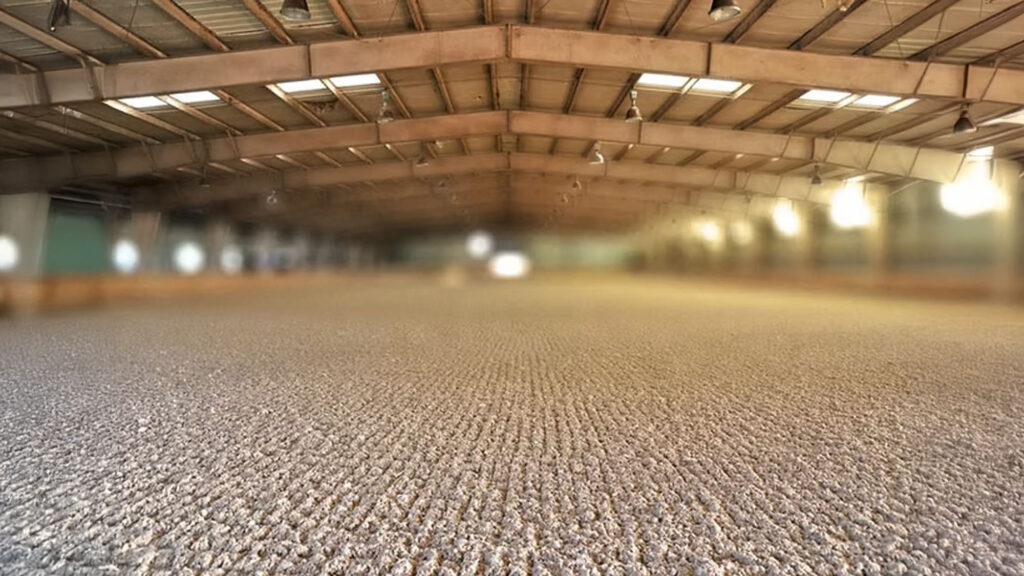
High-use arenas need more than just a decent riding surface. They need footing that can stand up to constant traffic, support a variety of disciplines, and stay consistent even when the arena is used day after day. That is where blended footing solutions come in. By combining different materials into one carefully balanced surface, blended footing can help create an arena that performs better and lasts longer.
For busy facilities, that balance matters. A footing system that is too loose, too hard, too dusty, or too unstable can quickly lead to maintenance issues and an inconsistent ride. Blended footing solutions are designed to reduce those problems by bringing together the qualities riders want most: cushion, traction, durability, and comfort.
Blended footing is not just one material on its own. It is a combination of components that work together to improve the overall riding surface. In many cases, this includes sand paired with textile fibers, rubber, or other supportive additives that help create a more stable and functional arena.
This type of footing stands out because it can be tailored to fit the needs of a specific arena. Instead of relying on a single material to do everything, a blended surface can be designed to offer better structure, improved moisture retention, and more even performance across the ring. That flexibility makes it especially valuable for arenas that see a lot of use.
A high-use arena experiences a lot of wear and tear. Horses travel the same paths, riders perform repeated movements, and footing gets compacted or displaced faster than in a lower-traffic space. Over time, that can lead to deep ruts, hard spots, loose areas, and uneven ride quality.
Blended footing helps manage that pressure by creating a surface that holds together better and responds more consistently to use. It can reduce some of the strain that heavy traffic places on the arena, making it easier to maintain a rideable surface throughout the week. For lesson barns, training centers, boarding facilities, and competition venues, that reliability is a major advantage.
One of the biggest benefits of blended footing is the way it supports both horse and rider. Horses do best on surfaces that provide enough give to absorb impact while still offering the support needed for secure movement. Riders benefit from a surface that feels predictable and stable under foot.
A well-designed blended footing can help create that middle ground. It may feel smoother, more balanced, and more comfortable than a basic sand surface, especially in arenas where performance and safety are priorities. That kind of comfort can make daily riding more enjoyable while also supporting long-term soundness.
Durability is one of the biggest reasons arena owners turn to blended footing solutions. Because the materials are chosen to work together, the surface may resist breakdown better than footing made from a single component alone. That can mean fewer major corrections, less frequent replacement, and better value over time.
In high-use arenas, that durability is especially important. A surface that wears out too quickly can lead to rising maintenance costs and more downtime. Blended footing helps reduce those challenges by creating a footing system that can hold its structure through repeated use.
Not all footing solutions are the same, and that is part of what makes blended options so useful. Depending on the arena’s goals, footing can include sand, textile fibers, rubber, or combinations of these materials. Each one brings different benefits to the surface.
Because no two arenas are exactly alike, the best solution is often the one built for that specific space. Blended footing makes that possible by giving arena owners more control over performance.
For arenas that host daily lessons, regular training, clinics, or frequent riding, blended footing can be a smart long-term investment. It helps create a surface that performs well under pressure while also supporting rider comfort and horse safety. That combination is difficult to achieve with a single-material footing alone.
The right blend can also make maintenance more manageable. When the footing is designed to stay more consistent, it is easier to groom, easier to care for, and less likely to develop severe problem areas. Over time, that can save both time and money.
A great arena surface does not happen by accident. It comes from choosing materials that work together and support the kind of riding your facility sees every day. Blended footing solutions offer that kind of performance by combining the strengths of different footing materials into one dependable system.
For high-use arenas, that can make all the difference. Better durability, more comfort, and more consistent daily performance all add up to a surface that riders can trust. And when the footing works better, the whole arena works better too.