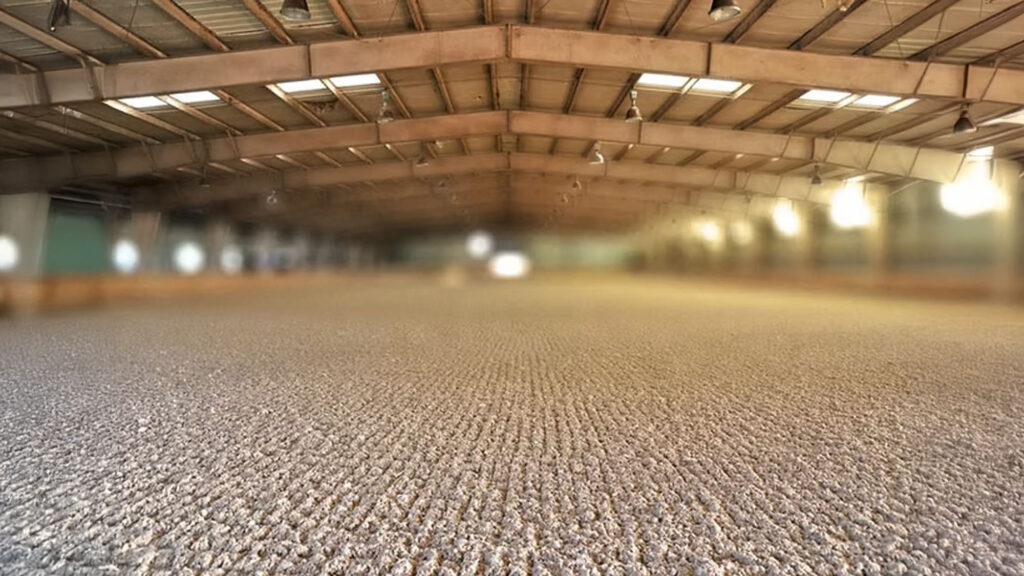
When you invest in quality footing, the drag you use—and how you use it—directly affects performance, safety, and longevity. The right arena drag setup will help you maintain a consistent surface, protect your base, and get the most out of your GGT Footing, whether you ride indoors, outdoors, or both.
This guide walks through key differences between indoor and outdoor arenas, the main types of drags, and how to choose the best configuration for your facility.
Why Your Arena Drag Choice Matters
The wrong drag can undo a lot of good footing work in a short amount of time. Aggressive teeth, inconsistent depth, or poor pattern choices can pull fibers up, disturb the base, or create hard and soft spots that riders and horses will feel immediately.
A properly matched arena drag will help you:
- Maintain a level, even surface from rail to centerline
- Keep your cushion layer intact while protecting the base
- Blend sand and fiber (or other additives) without bringing them to the surface
- Adjust quickly to seasonal or daily changes in moisture and traffic
Indoor and outdoor rings face different challenges, so it makes sense that their ideal drag setups won’t be identical.
Understanding Indoor Arena Drag Needs
Indoor arenas benefit from protection from the elements, but they bring their own set of maintenance requirements. Airflow, dust, and limited natural moisture all play a role in how you groom your surface.
Key considerations for indoor rings:
- Moisture management: Indoors, footing often tends to dry out and become dusty. Your drag should be compatible with your watering system and help evenly distribute moisture instead of pushing material into piles.
- Controlled environment: Because indoor rings don’t get rained on, surface conditions are typically more predictable. This allows you to fine‑tune drag settings and patterns for consistency day after day.
- Discipline and traffic: Many indoor arenas carry a lot of flatwork, dressage, and lesson traffic. You’ll want a drag that can quickly smooth hoofprints, even out tracks, and refinish the rail without over‑aggressively digging into the footing profile.
For indoor GGT Footing arenas, a drag that offers adjustable tines paired with a roller or finishing bar is ideal. You can set tine depth to lightly loosen the surface, then let the roller re‑compact and finish for a uniform, non-shifting top layer.
Understanding Outdoor Arena Drag Needs
Outdoor arenas are at the mercy of weather, which means your drag has to handle a wider range of conditions—from freshly rained‑on to bone dry.
Key considerations for outdoor rings:
- Weather and drainage: After heavy rain, you may need to stay shallower with your tines to avoid disturbing wet layers or the base. In dry, baked conditions, you may go slightly deeper to loosen compacted areas.
- Sun and wind exposure: These can dry the top layer quickly, leading to inconsistent moisture and firmness. A good drag will help blend drier and slightly damper spots for a more uniform feel.
- Mixed usage: Outdoor arenas often host jumping, western, flatwork, and sometimes schooling shows. Your drag should be versatile enough to adjust for different disciplines without changing equipment.
In an outdoor GGT arena, look for a drag that offers:
- Multiple adjustment points (tine angle and depth)
- Side plates or edge tools to pull material back in from the rail
- A finishing roller or bar to smooth, consolidate, and protect the surface
This flexibility allows you to adapt your grooming approach to yesterday’s weather, today’s ride schedule, and tomorrow’s forecast.
Types of Horse Arena Drags and Their Roles
Not all arena drags are created equal, and not all are suitable for sand-and-fiber or geotextile blends. Understanding the main styles will help you choose wisely.
Common drag and grooming tool types:
- Chain harrows: Good for simple sand or gravel, but generally too aggressive and imprecise for engineered fiber footing. They can easily pull fibers to the surface or scar the base if used incorrectly.
- Tine drags: Use adjustable teeth to loosen compacted material. For GGT and similar footings, you’ll want specially designed tines and angles that agitate the top layer without digging into the base.
- Arena conditioners: More sophisticated tools combining tines, blades, and rollers. Ideal for sand-and-fiber arenas, as they let you set a precise working depth and leave a consistent finish.
- Roller/finisher attachments: Often used as the last stage of grooming to smooth the top, close the surface slightly, and leave clean tracks and a level profile.
When working with geotextile or fiber footing, it’s important to choose equipment designed for those materials. Generic agricultural tools may be too aggressive, inconsistent, or simply not adjustable enough for a premium horse arena surface.
Indoor vs. Outdoor: How to Choose the Right Drag
While the basic principles of good grooming apply to both ring types, each environment leans toward slightly different priorities.
For indoor arenas, prioritize:
- Fine control over depth and aggressiveness
- Compatibility with your watering and dust-control plan
- Ease of use for frequent, quick touch‑ups between lessons or training sets
For outdoor arenas, prioritize:
- Versatility to handle wet, ideal, and dry conditions
- Robust construction and materials suitable for exposure to weather
- Adjustable settings to support multiple disciplines and seasonal changes
In both cases, you’ll want a drag that:
- Protects the base by limiting working depth
- Evenly re‑distributes footing from high‑traffic to low‑traffic areas
- Maintains a consistent, supportive cushion that supports soundness and performance
If you operate both indoor and outdoor arenas, consider a drag system that can be quickly re‑adjusted for each environment, or paired attachments that allow you to tailor the tool to the footing and daily conditions.
Best Practices for Dragging Indoor vs. Outdoor Arenas
Once you have the right drag, how you use it is just as important as the equipment itself.
For indoor arenas:
- Drag more frequently, but often less aggressively—light, regular passes help maintain consistency without overworking the footing.
- Monitor dust and moisture and adjust your frequency and tine depth accordingly.
- Use consistent drag patterns (such as alternating directions) to avoid creating low spots or ridges.
For outdoor arenas:
- Adjust drag depth based on recent weather—shallower after rain, slightly deeper during long dry spells (within the limits recommended for your footing system).
- Pay extra attention to high‑traffic zones—take a pass along the rail, approach to jumps, and centerline to pull material back in and keep the surface level.
- Vary your drag patterns to avoid creating “waves” or repeated compaction paths.
Taking the time to refine your drag routine will show up in ride quality, reduced maintenance surprises, and a longer life for your footing investment.
Work with GGT Footing to Match Drag and Footing
Choosing the right drag is easier when you’re not doing it alone. GGT Footing works with arena builders, owners, and facility managers every day to match footing blends with appropriate maintenance equipment and routines.
If you’re unsure whether your current drag is helping or hurting your surface—or you’re planning to update your footing—reach out to the GGT Footing team for guidance. We can help you:
- Evaluate your existing equipment and make adjustment recommendations
- Determine whether a new drag or conditioner would better support your footing type
- Develop an indoor and outdoor grooming schedule that fits your facility’s traffic and climate
Your arena drag is more than a maintenance tool—it’s a key part of your overall footing system. Choosing the right setup for indoor and outdoor use will help you protect your investment and give horses and riders the consistent, high‑performance surface they deserve.