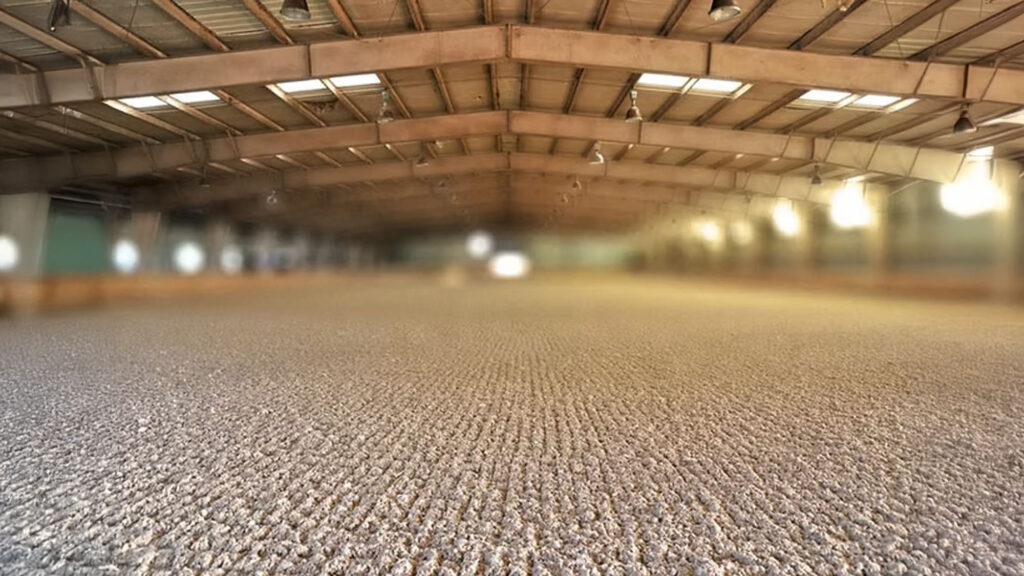
A great riding surface starts below the footing. While top-layer materials often get the attention, the arena base plays a major role in how stable, drainable, and consistent an arena feels under hoof.
When the base is unstable, uneven, or poorly drained, no amount of dragging or adding footing can fully solve the problem. Over time, riders may notice deep spots, shifting material, standing water, inconsistent traction, and increased maintenance demands.
Arena mats can help create a more dependable foundation beneath the footing. By separating layers, supporting drainage, and reducing base movement, they give arena owners a practical way to address recurring surface issues.
Footing naturally moves during riding, especially in high-traffic areas such as corners, jump lines, rail paths, and turns. However, excessive movement may indicate that the footing is mixing into the base or that the base itself is not holding material in place.
When footing and base materials blend together, the arena can lose its intended consistency. Areas that should feel supportive may become loose, deep, or unpredictable. This can make regular grooming more difficult because dragging may continue pulling mixed material across the arena rather than restoring an even surface.
Arena mats can help create separation between the footing and the base. This barrier helps keep each layer where it belongs, reducing contamination and making it easier to maintain a more uniform riding surface.
Potential benefits include:
For arena owners who regularly battle deep corners or thin spots along the rail, improving the layer beneath the footing can make a noticeable difference.
An arena may look level from a distance but still have soft spots that feel different under horses’ feet. These areas can develop when the base compresses unevenly, when footing works into the ground below, or when moisture collects in one part of the arena.
Soft spots can be frustrating because they often return after temporary repairs. Adding more footing may cover the issue briefly, but it can also make the affected area deeper if the underlying base is still weak or unstable.
Arena mats provide structural support across the surface. Installed beneath the footing, they can help distribute pressure more evenly and reduce the tendency for certain sections of the arena to compress or shift more than others.
This is particularly useful in arenas with:
A more stable foundation helps support a surface that feels more predictable from one end of the arena to the other.
Puddling is one of the most common complaints among arena owners. Water can collect after rain, irrigation, or snowmelt when the base does not allow moisture to move through and away from the surface efficiently.
Standing water is more than an inconvenience. It can soften the footing, weaken the base, contribute to ruts, and limit riding time. Repeated wet-and-dry cycles can also lead to uneven compaction, creating long-term maintenance challenges.
Arena mats can support drainage by creating channels or open spaces that allow water to move beneath the riding surface. Rather than trapping moisture near the top layer, a properly designed mat system can help direct water downward and across the base.
The result may be:
Drainage performance still depends on the overall arena design, including slope, subgrade preparation, drainage outlets, and base materials. However, mats can be an important part of a system designed to manage moisture more effectively.
A clean separation between the base and the footing is essential for long-term arena performance. When base stone, soil, or fines migrate upward into the footing, the top layer can become less consistent and more difficult to manage.
Likewise, when footing works downward into the base, the arena gradually loses usable depth. Owners may find themselves adding material more often, even though the original footing has not truly disappeared—it has simply mixed into layers where it no longer contributes to the intended riding surface.
Arena mats help protect that separation. By keeping the footing above the base, mats can help preserve the qualities of both layers.
This may help arena owners maintain:
For new arena construction, installing mats before adding footing can help protect the surface from day one. For arena renovations, mats may also be part of a larger solution when existing layers have become mixed or unstable.
Every arena develops wear patterns. Horses naturally travel along the rail, riders repeat circles and transitions in familiar locations, and jumping arenas experience concentrated impact around takeoff and landing areas.
Without adequate support beneath the footing, those high-use zones can develop ruts, depressions, and uneven depth. Dragging can smooth the surface temporarily, but it may not address the underlying cause if the base continues to move or compress.
Arena mats can help reinforce the riding area so it resists repeated deformation. A more stable base gives the footing a more reliable platform, helping it maintain a better profile between grooming sessions.
Mats are especially worth considering for:
By reducing base movement, arena mats can help owners spend less time correcting the same problem areas.
Horses and riders can feel when an arena changes from one section to another. One end may feel firm and supportive, while another feels deep, loose, wet, or compacted. These inconsistencies can affect rider confidence and make it difficult to create a uniform training environment.
Inconsistent conditions often point to differences below the surface. Uneven drainage, varying subgrade conditions, base compaction issues, and footing migration can all contribute.
Arena mats help create a more uniform layer across the arena. While they are not a replacement for proper site preparation, they can help reduce the impact of underlying variations and support a more consistent riding experience.
A more even surface can benefit:
Regular maintenance is part of owning any horse arena. Grooming, watering, monitoring depth, and addressing wear are all necessary to maintain a quality surface.
But if an arena constantly needs major corrections, additional footing, or repeated base repairs, the issue may be more than routine upkeep. Excessive maintenance can signal that the layers beneath the footing are not working together effectively.
Arena mats can help protect the investment already made in footing and base materials. By improving separation, support, and drainage, they may reduce some of the factors that lead to frequent surface breakdown.
Over time, this can mean:
The goal is not to eliminate maintenance. Instead, it is to build an arena system that responds better to routine care and holds up more consistently under use.
Arena mats can be especially valuable when an arena has recurring surface problems that do not improve with dragging, watering, or adding more footing. They may also be a smart investment during new construction, when it is easier to build a strong foundation before the footing is installed.
Consider arena mats if your arena has:
The right solution depends on the arena’s location, climate, existing base, footing type, drainage plan, and intended use. A properly designed arena system considers all of these factors together—not just the material on top.
The riding surface is only as dependable as the foundation beneath it. If shifting footing, standing water, soft spots, or uneven wear continue to affect your arena, it may be time to look below the surface.
GGT Footing arena mats are designed to support a more stable, drainable, and consistent arena foundation. When paired with the right base preparation and footing, mats can help protect your surface investment and create a better experience for horses and riders.
Whether you are building a new arena or improving an existing one, Contact GGT Footing for footing, base, and mat solutions designed for your facility’s needs.