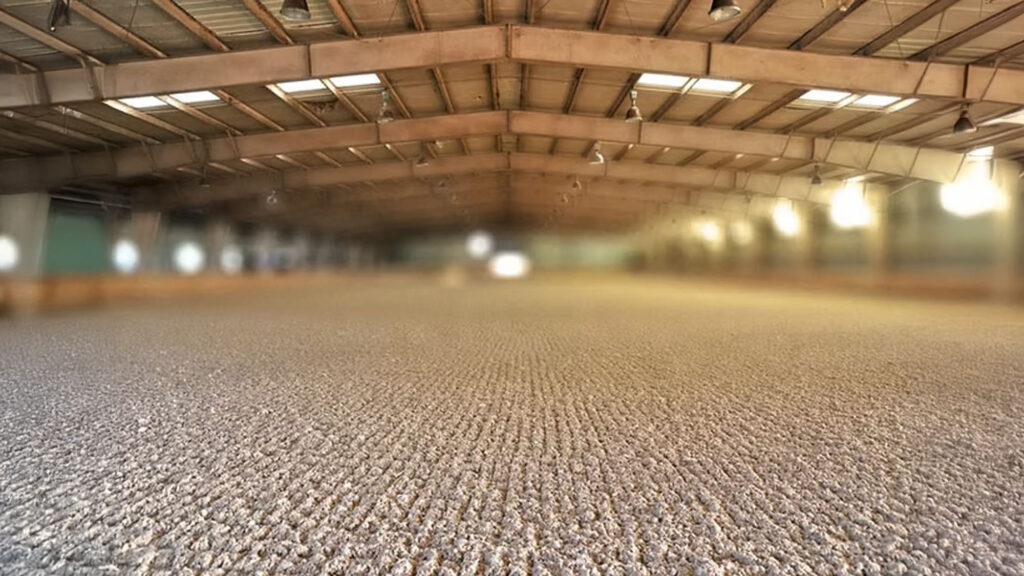
Choosing the right arena footing is one of the most important decisions for any equestrian facility. Whether you’re building a new arena or updating an existing one, the footing you choose will affect your horses’ performance, health, and the longevity of your riding surface. The two primary categories—natural and synthetic footing—each have distinct advantages. Understanding how they differ helps you find the best fit for your discipline, climate, and maintenance needs.
Natural footing refers to materials like sand, dirt, or organic blends without synthetic components. These surfaces are appreciated for their affordability and accessibility but require frequent upkeep to maintain consistency.
Pros of Natural Footing:
Cons of Natural Footing:
Synthetic footing incorporates engineered materials such as geotextile fibers, rubber, or specialized sand blends—often mixed to create a consistent, high-performance surface. GGT Footing, for example, uses durable textile fibers designed to bind with sand for improved structure, stability, and water retention.
Pros of Synthetic Footing:
Cons of Synthetic Footing:
Many arena owners choose a blended solution—using natural sand mixed with synthetic fibers or rubber to combine the best characteristics of both. This approach offers improved stability and longevity without excessively increasing maintenance or cost.
When evaluating your options, consider:
While natural footing works well for lighter use or smaller facilities, synthetic and blended systems typically provide better value over time. They reduce maintenance demands, improve riding quality, and extend the lifespan of both footing and base layers.
Whether you prefer the classic feel of natural materials or the performance consistency of synthetic blends, the key is to choose footing suited to your horses, discipline, and environment. A well-chosen surface enhances safety, confidence, and ride quality for years to come. To learn more about GGT Footing’s premium synthetic blends and customized arena solutions, visit www.ggtfooting.com.