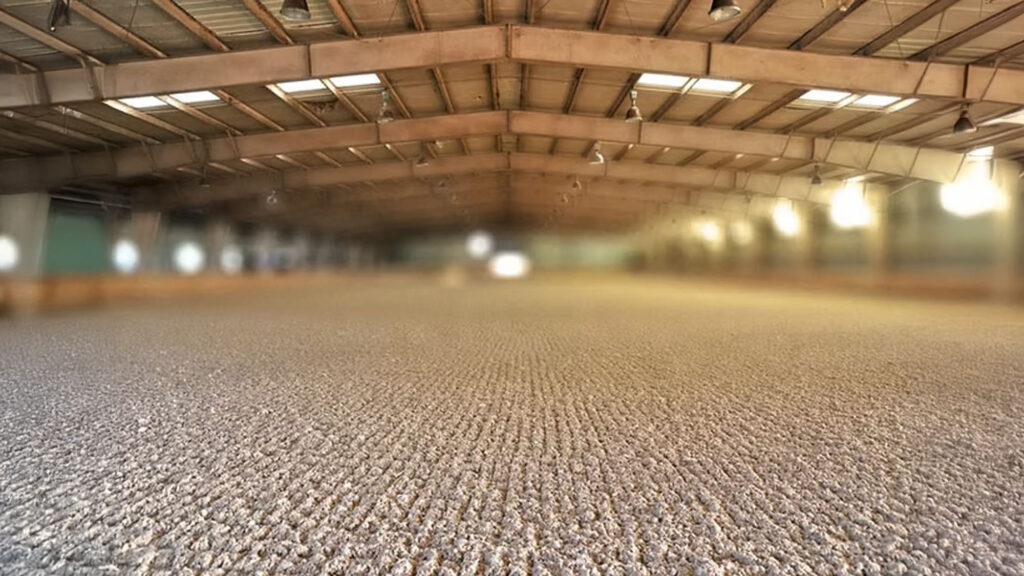
Keeping equine arena footing in good condition is essential for horse soundness, rider safety, and consistent performance. When footing becomes deep, slick, or uneven, small problems can quickly turn into bigger issues that affect every ride.
Poorly maintained footing increases concussion, strain, and the risk of slips or missteps. Horses working daily on inconsistent surfaces are more likely to develop joint, tendon, and soft-tissue injuries over time.
For trainers and facility owners, inconsistent arenas also lead to frustrated riders, reduced confidence, and more downtime while footing is repaired. Well-managed footing, on the other hand, supports balanced movement, better engagement, and more productive schooling sessions.
Deep footing often comes from overly loose sand, inadequate compaction, or a surface that has been over-worked with aggressive grooming. Horses must work harder to push through the depth, which can strain tendons, ligaments, and backs.
To correct deep footing:
Slippery footing shows up as sliding in corners, poor push-off at the canter, or tracks that “skate” across the top instead of creating a clean print. This often results from sand that is too dry, too shallow, or lacking in angular particles and supportive additives.
To improve traction:
Low spots, high ridges, and rutted tracks often form along rail lines, at takeoff and landing zones, or anywhere traffic is heaviest. Over time, horses end up repeatedly stepping into the same holes or ridges, creating inconsistent loading on limbs and joints.
To restore an even surface:
Dust isn’t just a cosmetic issue; it affects respiratory health for horses, riders, and spectators. Dry, breaking-down footing particles become airborne easily, especially in enclosed arenas with poor ventilation.
For better dust control:
Small, consistent habits go a long way toward preventing footing problems from returning. Simple routines can extend the life of your surface and reduce the need for major renovations.
Helpful practices include:
When an arena starts showing chronic issues—deep corners, slick takeoff zones, or persistent dust—professional guidance can save both time and money in the long run. GGT Footing works with barns, trainers, and builders to evaluate existing sand, diagnose footing problems, and recommend targeted solutions instead of one-size-fits-all fixes.
With carefully engineered geotextile and fiber additives, GGT Footing helps transform ordinary sand into a more supportive, consistent surface tailored to your discipline, climate, and budget. Whether you are refreshing an older arena or designing a new one from the ground up, the GGT Footing team can help you create footing that feels great to ride on while supporting long-term soundness for the horses in your program.
Contact one of our experts today to get started.