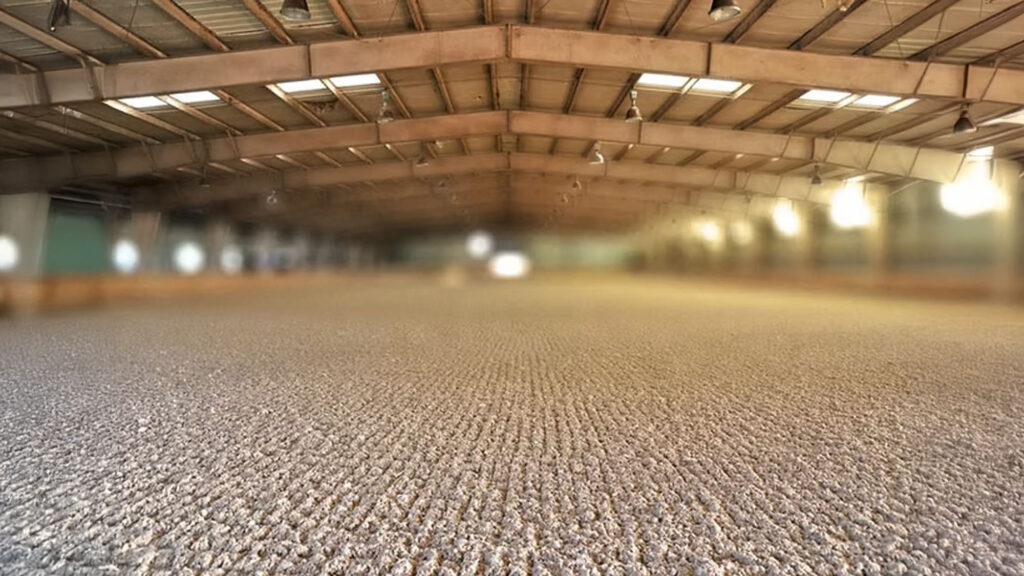
Footing technology has come a long way from the simple dirt and sand arenas of the past. As equestrian sports have evolved, so too has the demand for consistent, safe, and high-performance riding surfaces. Today’s arena footing blends are the result of decades of innovation, where science, materials engineering, and equine biomechanics come together to create footing designed for longevity and equine well-being.
In the early days of equestrian competition and training, arenas were often little more than compacted soil or dirt enclosures. While sufficient for light work, these surfaces quickly became uneven, dusty, and unpredictable—especially with changes in weather.
As equestrian disciplines grew more competitive, riders and trainers began adding sand to improve stability and reduce compaction. Sand arenas offered better traction and drainage than raw dirt, providing a more uniform surface. However, over time, sand alone would break down into fine particles, creating dust and inconsistent footing depth.
By the late 20th century, advancements in material science began reshaping the equestrian world. Fiber additives, rubber, and textile blends were introduced to improve sand’s performance. These engineered footings provided better moisture retention, energy return, and shock absorption—all crucial factors for horse health and rider safety.
Blends like GGT Footing combined high-quality textiles and fibers with carefully selected sands, creating footing that could replicate the feel of natural turf while maintaining consistency under high performance demands. The result: a surface that reduces joint stress, prevents deep tracking, and enhances energy rebound with every stride.
Modern arenas are no longer one-size-fits-all. Dressage, show jumping, and eventing all place different demands on footing. Dressage arenas benefit from stability and grip for precise movements, while jumpers need elasticity and traction for quick takeoffs and landings.
Today’s elite facilities work closely with footing experts to tailor material composition, base construction, and maintenance plans to their specific discipline and climate conditions. This level of customization ensures both long-term performance and horse comfort.
The future of arena footing is rooted in sustainability. Modern blends increasingly feature recycled materials, eco-friendly fibers, and improved water efficiency. These advancements not only reduce environmental impact but also lower maintenance costs for facility owners.
At GGT Footing, research and development continue to push the boundaries of performance footing. With a focus on longevity, safety, and innovation, GGT Footing is shaping the next generation of equestrian surfaces—helping riders and horses perform their best while protecting the planet.
What began as simple dirt rings has evolved into a highly engineered surface that supports both horse welfare and competitive excellence. Understanding this evolution highlights how far the sport has come—and underscores the importance of choosing the right footing partner for the future.
Learn more about how GGT Footing continues to lead the evolution of arena surfaces at www.ggtfooting.com.