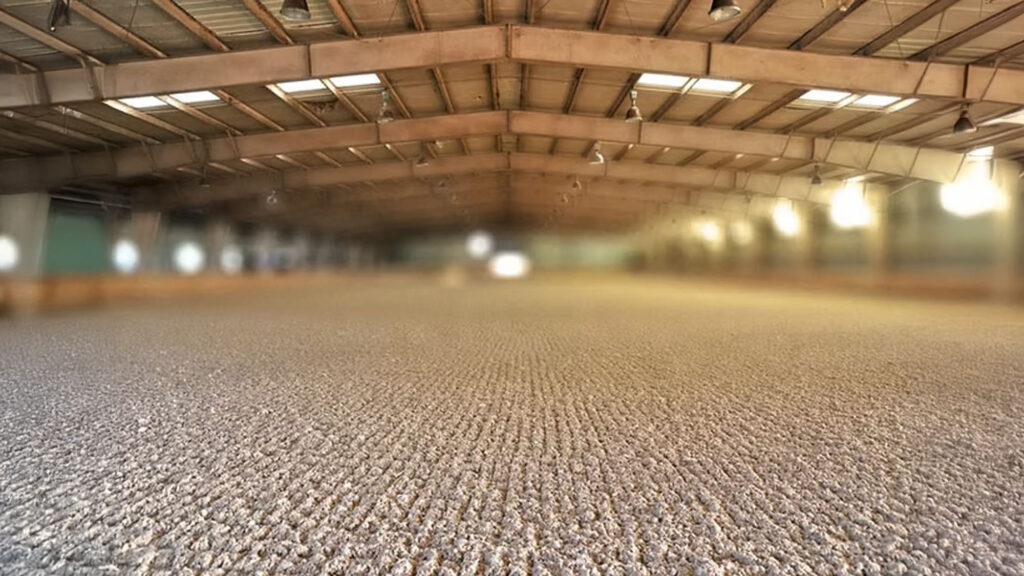
A dusty arena can turn a productive ride into an uncomfortable—and potentially unsafe—experience for both horse and rider. When fine particles rise with every stride, visibility drops, air quality suffers, and the footing may signal a deeper issue with moisture balance, sand quality, maintenance, or compaction.
The good news: dust is manageable. With the right footing system, moisture plan, maintenance routine, and arena additives, you can transform a dry, inconsistent surface into dependable horse arena footing that supports comfortable, confident riding.
Arena dust usually does not come from one single cause. It is often the result of several factors working together, including dry weather, fine sand particles, inadequate watering, heavy traffic, or a footing blend that does not retain moisture well.
Common causes of dusty horse arena footing include:
A dusty surface is not just a nuisance. It can make it harder for riders to see clearly, create respiratory discomfort, and lead to an inconsistent feel underfoot. When footing becomes overly dry, it can also lose the cohesion needed to provide reliable support and traction.
Water is one of the most important tools for controlling dust in horse arenas. Proper moisture helps fine particles stay in the footing rather than becoming airborne, while also helping the surface feel more stable and consistent.
The goal is not to make the arena wet or muddy. Instead, aim for footing that is damp enough to hold together under a hoof or boot but still drains and rides comfortably.
For many arenas, more frequent, lighter watering is more effective than occasional heavy soaking. A regular schedule can help maintain a more even moisture level from one ride to the next, especially during hot, dry, or windy weather.
To improve moisture management:
For outdoor arenas, rainfall should be part of the plan—but not the entire plan. Rain is often uneven, unpredictable, and may not penetrate the footing evenly enough to maintain dependable riding conditions.
Arena additives can play an important role in dust control by helping footing retain moisture, improve stability, and reduce the movement of fine particles. The best additive depends on your existing sand, riding discipline, climate, drainage, maintenance equipment, and desired surface feel.
For arenas that dry out quickly or require frequent watering, GGT Arpolith offers an organic moisture-control option designed to help keep footing at a more consistent moisture level. Made from volcanic rock, Arpolith can be incorporated into virtually any sand footing and is suitable for both indoor and outdoor horse arenas.
It works by absorbing and storing water within the footing. This helps extend the benefit of each watering cycle, reducing the need for frequent irrigation while helping limit airborne dust.
Magnesium chloride is another commonly used additive for dust suppression. It can help keep fine particles from becoming airborne by increasing moisture retention in the footing. When paired with Arpolith, it can retain moisture by 30% then gradually release that moisture as the surrounding footing begins to dry.
For arena owners, this can mean a surface that stays more dependable between waterings—especially during hot, dry, or windy weather. Rather than allowing the top layer to dry rapidly and become loose or dusty, additives support more consistent moisture retention throughout the footing profile.
Even the best footing blend needs a thoughtful maintenance program. Dragging is essential for redistributing material and correcting unevenness, but overworking dry footing can make dust worse by fluffing fine particles and bringing dry material to the surface.
A dependable routine should include:
For example, if the footing becomes dusty shortly after dragging, the solution may not be to drag more often. You may need to reduce drag depth, water before grooming, evaluate moisture coverage, or assess whether the footing requires an additive or material refresh.
GGT Footing recommends consistent watering to keep fibers damp, regular dragging to maintain even depth and fiber distribution, and extra attention to high-traffic zones such as rail lines, corners, and jumps.
Dust is often the most visible symptom, but it is rarely the only one. Your arena may benefit from a footing evaluation if you notice:
Addressing these concerns early can help protect your footing investment and create a more comfortable experience for everyone using the arena.
Dust control is not about one product or one maintenance task. It is about creating a balanced arena footing system that supports moisture retention, stability, drainage, and consistency.
A combination of clean, suitable sand; a properly selected additive; regular watering; and smart grooming practices can make a meaningful difference in how your arena looks, feels, and performs. Fiber additives can be especially valuable for facilities seeking improved moisture retention and a more stable, resilient sand surface.
Whether your arena is used for daily training, lessons, competition preparation, or casual riding, dependable footing helps you focus on the ride—not on the dust.
Ready to improve your horse arena footing? Explore GGT Footing’s fiber blends, arena additives, and moisture-control solutions to build a safer, more consistent surface for horses and riders.