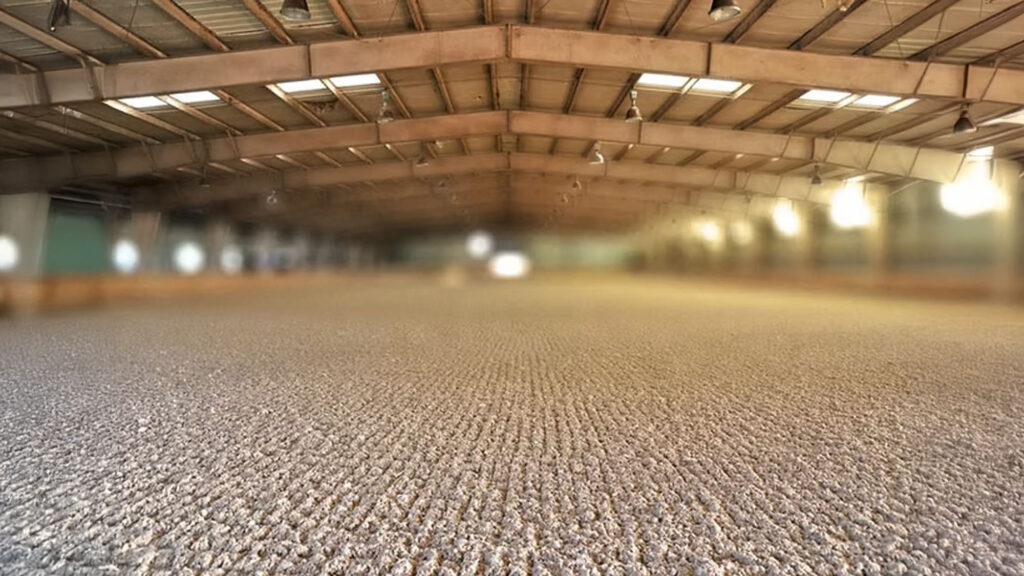
As expectations for performance, safety, and sustainability continue to rise, equestrian footing is evolving quickly. Arena owners who stay ahead of these trends can offer better experiences for riders and horses while also protecting their investment for the long term.
One major trend is the move toward more refined textile blends designed for specific disciplines and climates. Arena owners are no longer limited to a one-size-fits-all approach; instead, they can choose footing that offers tailored levels of grip, cushioning, and stability for dressage, jumpers, eventers, or multi-use facilities. Thoughtfully engineered textiles help sand resist compaction, reduce dust, and provide a more consistent ride from day to day.
The industry is also placing renewed emphasis on what lies beneath the footing. High-performance base mats and engineered base systems are becoming more common, especially in professional and all-weather arenas. These systems help distribute impact, support more even footing depth, and improve drainage so the surface rides more consistently in changing conditions. For arena owners, this can mean fewer repairs and a longer lifespan for the entire arena build.
As weather patterns become less predictable, demand is increasing for footing that can handle rain, temperature swings, and heavy use without major performance changes. Materials and construction methods are being developed to optimize drainage, reduce waterlogging, and help the footing recover quickly after storms. In drier regions, footing systems that retain moisture more effectively or require less watering are also gaining attention.
Sustainability is shaping the next generation of equestrian footing. Arena owners are showing more interest in responsibly sourced sands, recycled textile fibers, and systems that reduce water use and waste. Recycled components, when properly processed and engineered, can deliver the same—or better—performance while supporting a more environmentally conscious facility image. This focus on greener materials aligns with broader expectations from riders, sponsors, and the equestrian community.
Another emerging trend is the use of more scientific testing and data-driven design in footing selection. Instead of relying solely on “feel,” more arenas are considering metrics like impact absorption, shear resistance, and consistency across the surface. This approach helps arena owners confidently choose footing systems that match their discipline demands, usage levels, and long-term goals, reducing guesswork and costly trial-and-error.
By paying attention to these trends—advanced textiles, improved base systems, all-weather performance, sustainable materials, and science-backed design—arena owners can plan footing upgrades that keep their facilities competitive, safe, and ready for the future.