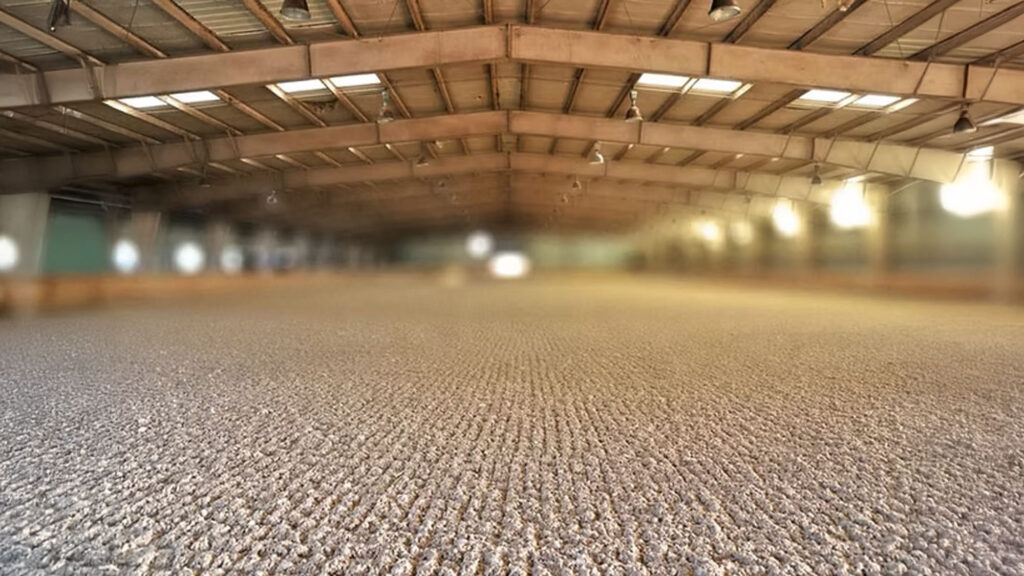
A consistent riding surface does not happen by accident. Whether you are training at home, operating a busy boarding facility, preparing for competition, or teaching beginner lessons, your horse arena footing plays a major role in how the arena rides every day.
The ideal surface should feel predictable beneath the horse’s feet. It should offer appropriate support, cushioning, traction, and stability without becoming too deep, loose, dusty, hard, or slippery. Achieving that level of consistency starts below the visible riding surface—with a properly prepared base—and continues with the right footing materials and regular maintenance.
At GGT Footing, we understand that every arena has different needs. However, the goal remains the same: create a reliable surface that supports horses and riders through changing weather, daily use, and every stage of training.
When arena footing changes from one area to another, horses and riders notice. A surface may feel firm along the rail, deep in the corners, slick in shaded areas, or dusty in the middle of the arena. These inconsistencies can affect confidence, performance, and the amount of maintenance required to keep the arena usable.
Consistent horse arena footing helps create a more dependable environment for:
A predictable surface allows riders to focus more on their position, training goals, and communication with the horse. It also helps horses move with greater confidence because the footing responds more consistently from one stride to the next.
While no arena surface remains identical without care, the right construction and footing system can make maintaining consistency much more manageable.
The footing layer is what riders and horses feel first, but the arena base has a major influence on how that top layer performs. A well-built base provides the structure needed to support the footing above it.
Without a stable, properly graded base, even high-quality footing can become difficult to manage. Footing may shift, develop uneven depths, hold water, or wear away in high-traffic areas. Over time, this can make the arena less predictable and create more work for the facility owner.
A strong arena base should help support several important functions:
Drainage is particularly important. When water cannot move through or away from the arena properly, footing may become compacted, muddy, uneven, or difficult to drag. In some cases, the arena can feel different after every rainfall.
The right base design depends on the site, climate, native soil, intended discipline, and whether the arena is indoors or outdoors. A footing professional can help evaluate these factors before a surface is installed or renovated.
Horse arena footing is more than simply adding sand to a riding area. The materials used—and the way they work together—affect how the surface responds to impact, movement, moisture, and traffic.
Sand is commonly used as the primary component of arena footing because it can provide a stable and workable riding surface. However, not all sand performs the same way. Particle shape, size, angularity, cleanliness, and compaction all influence how the arena feels underfoot.
A footing blend may also include additives designed to improve specific characteristics of the surface. Depending on the needs of the arena, materials can help with:
For example, textile fibers can help create a more interconnected surface by supporting the sand and helping reduce excessive movement. Rubber products may contribute cushioning and impact absorption in certain footing systems. Wax-coated footing can help manage moisture and dust in indoor and outdoor arenas, depending on the product and arena design.
The best solution is not always the footing with the most components. It is the system that is properly matched to the horses, discipline, climate, budget, maintenance routine, and existing arena construction.
Even a high-quality footing material can perform poorly if it is too deep, too shallow, or unevenly distributed. Footing depth affects how much the horse’s hoof sinks into the surface and how the arena responds during movement.
When footing becomes too deep, horses may have to work harder to move through it. The surface can feel loose and unstable, especially in corners, takeoff and landing areas, or locations that receive frequent traffic. If the footing is too shallow, the horse may reach the harder base below more quickly, which can make the arena feel firm.
The ideal depth varies by discipline and the type of footing system being used. Jumping arenas, dressage rings, Western arenas, and general-purpose riding arenas may each require different approaches.
Instead of relying on appearance alone, regularly measure footing depth in multiple locations. Check along the rail, in corners, near gates, at the centerline, and in other areas where traffic patterns may change the surface. These routine checks can reveal issues before they become more difficult to correct.
Before selecting new horse arena footing or updating an existing surface, consider how the arena will be used most often. The needs of a private backyard ring may be very different from those of a high-volume training barn or a competition venue.
Ask practical questions such as:
Thinking through these details helps create a footing plan that supports long-term performance rather than a short-term fix.
For example, an outdoor arena in the Southeast may require close attention to drainage, rainfall, humidity, and heat. An indoor arena may place greater emphasis on dust control, moisture retention, and how the surface holds up under concentrated daily traffic. The right materials and maintenance plan should reflect those real-world conditions.
The best horse arena footing systems work from the ground up. A stable base, effective drainage, properly selected footing materials, appropriate depth, and consistent maintenance all contribute to a surface that performs more reliably over time.
When these elements work together, riders can spend less time managing problem areas and more time focusing on their horses. A well-designed arena surface supports better daily riding conditions, helps protect the investment in your facility, and creates a more enjoyable experience for every horse and rider who enters the ring.
GGT Footing can help you evaluate your arena goals and find footing solutions designed for your facility, riding discipline, climate, and maintenance needs. Whether you are building a new arena or improving an existing one, consistency starts with the right foundation—and continues with the right footing system.