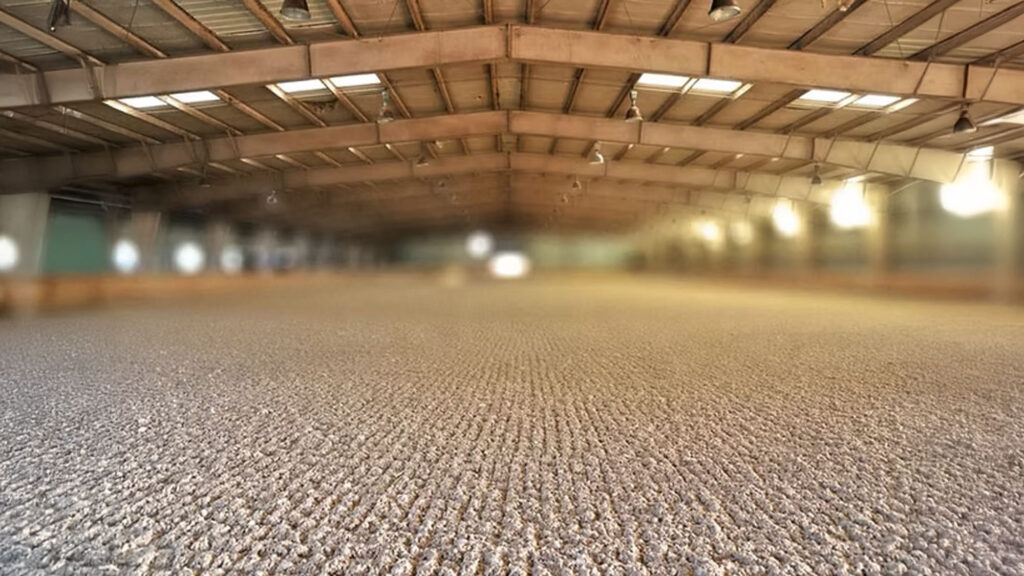
A quality horse arena drag does more than smooth the surface after a ride. The right drag helps redistribute footing, prevent compaction, preserve material structure, and keep the riding surface consistent—factors that directly affect how long your arena footing lasts.
Arena footing is a long-term investment. Whether your surface uses sand, fiber, or a GGT Footing blend, the drag you choose and how you use it can either protect that investment or accelerate wear.
Regular grooming redistributes footing that shifts during riding. Horses naturally push material toward the rail, into corners, and around takeoff and landing areas. Without routine dragging, those areas can become uneven, compacted, or inconsistent.
A quality drag helps:
These benefits matter because uneven or compacted footing can affect performance and may contribute to unnecessary strain on horses. Consistent grooming helps maintain the conditions the footing was designed to provide.
A well-designed arena drag protects footing by working with the material rather than against it. It should level and condition the surface without unnecessarily disturbing the base or damaging footing additives.
Repeated use can pack down sand and fiber blends, especially along rails and in frequently used corners. Regular dragging helps break up minor compaction and restore a more even surface.
When compaction is addressed consistently, the footing is less likely to become hard, shallow, or uneven. This helps preserve the cushion and support that make the surface comfortable and functional.
A quality drag moves footing back into low areas and redistributes material that has collected along the edges. This helps maintain a uniform depth and reduces the need to add replacement material as often.
Even distribution also helps prevent some sections from wearing out faster than others. Instead of repeatedly repairing the same corners or rail lines, routine grooming helps protect the entire surface.
Fiber and textile-blended surfaces require equipment that can mix, fluff, and level the footing without damaging the fibers or disturbing the base. A drag designed for these surfaces helps preserve the blend’s structure and performance.
For GGT Footing arenas, using a fiber-compatible conditioner is especially important. The right equipment can maintain surface texture and traction while supporting the long-term health of the footing.
Not every drag is suitable for every footing system. When evaluating a drag, look beyond price and consider whether it matches your arena’s material, depth, and maintenance needs.
Adjustability is one of the most important features in an arena drag. Different conditions require different levels of penetration, and an adjustable drag gives the operator more control.
A quality drag should allow:
The correct depth depends on the footing type and current surface condition. Grooming too deep or too shallow can compromise the structure of the surface.
The drag should suit the texture, depth, and composition of your footing. A drag that works well in plain sand may not be appropriate for a fiber or textile blend.
For fiber footing, prioritize equipment designed to work with synthetic blends. Fiber-compatible conditioners help preserve the surface rather than pulling fibers out of place or overworking the material.
A quality drag should hold up to regular use. Durable construction helps the equipment maintain consistent performance over time, which supports a more reliable grooming routine.
Look for a drag that is easy to operate and adjust. Equipment that is difficult to use is less likely to be used consistently, and consistency is what protects footing over the long term.
For most active arenas, dragging after every ride or training session is a practical starting point—especially in high-use areas such as corners and along the rail. GGT Footing recommends regular grooming to maintain an even, uniform surface.
Your schedule should reflect how often the arena is used, the footing type, and current conditions. A lightly used private arena may not need the same frequency as a busy lesson barn or training facility.
A practical routine includes:
A quality horse arena drag is a maintenance tool, not just a grooming accessory. The right drag helps preserve footing structure, maintain consistency, reduce compaction, and extend the usable life of your arena surface.
For more guidance, read GGT Footing’s Top Features in Horse Arena Drags for Sand and Fiber Footing and The Role of Daily Grooming in Preserving Arena Footing.
Ready to protect your arena investment? Contact GGT Footing to discuss footing-compatible arena conditioners and a maintenance routine suited to your surface.