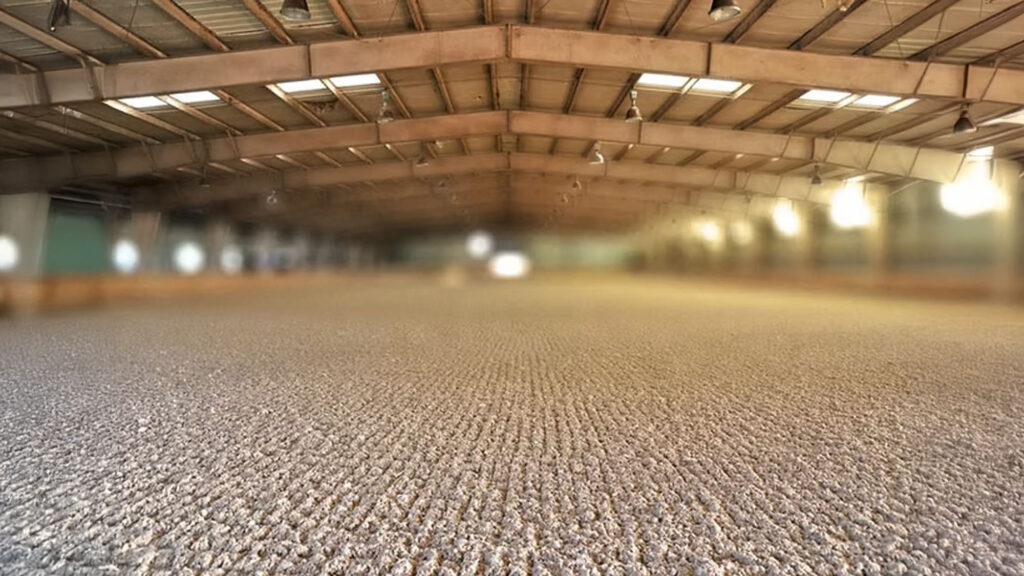
Water management is one of the most overlooked factors in arena performance. When drainage is poor, the surface stays wet too long, becomes inconsistent, and can even compromise the base over time. One of the most effective ways to improve this is by using base mats designed to support proper water movement.
For facilities dealing with seasonal rain, high humidity, or heavy arena use, understanding how base mats support drainage in horse arenas can help you build a more reliable, long-lasting surface.
Proper drainage affects nearly every aspect of your arena:
When water can’t move through the arena as intended, it doesn’t just sit on top—it works its way into the base and can cause long-term structural issues.
Base mats are typically installed between the sub-base and the top footing layer. Their design helps create a more controlled environment for water movement and surface stability.
Quality base mats are engineered to allow water to pass through while preventing materials from mixing excessively between layers. This helps:
Instead of water sitting in isolated pockets, it moves more evenly through the arena and exits through the intended drainage paths.
Without a protective layer, fine particles from the top footing can wash down into the base over time. This can clog drainage pathways and reduce the effectiveness of your sub-base.
Base mats help:
By protecting the structural integrity of the base, mats help your arena dry faster and stay more stable.
When water accumulates unevenly, some areas become soft while others stay firm. This creates an inconsistent ride that can affect both performance and safety.
Base mats support a more uniform surface by:
The result is a surface that feels more predictable, even in challenging weather.
Not every arena needs base mats, but they can be especially valuable in certain situations:
If your arena regularly stays wet too long or develops soft, unstable areas, base mats may be a key part of the solution.
Base mats work best as part of a complete system. To get the most out of their drainage benefits:
When all elements work together, the arena drains better, dries faster, and stays more consistent.
How base mats support drainage in horse arenas comes down to controlled water movement, base protection, and improved surface stability. By allowing water to flow through more evenly and preventing material mixing, base mats help create a safer, more reliable riding surface that performs better in all seasons.