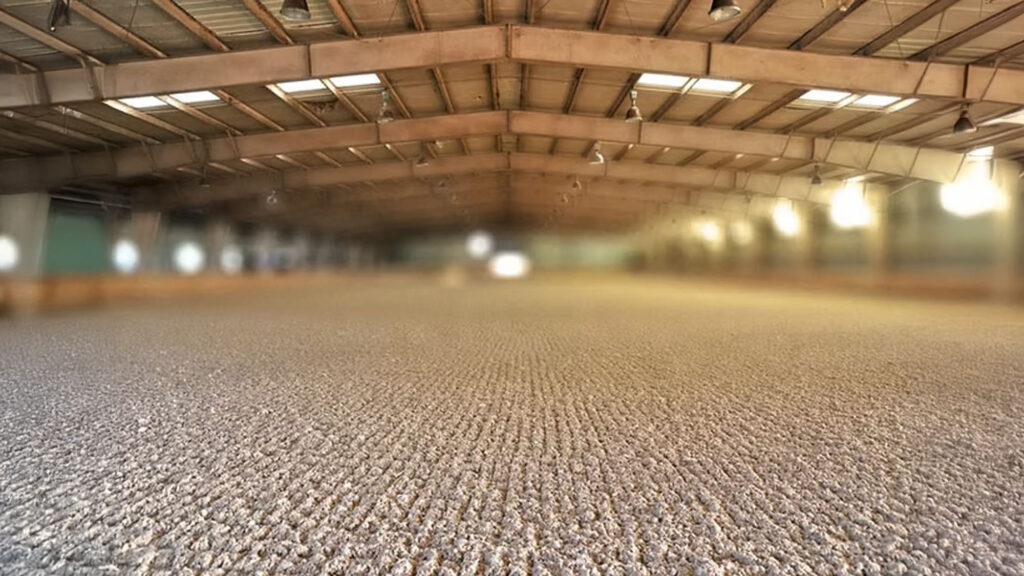
Achieving optimal stability in arena footing is essential for both equine performance and safety. A well-engineered surface must balance support, traction, moisture, and energy return. Textile-reinforced equestrian surfaces have proven to deliver these qualities by improving the structural integrity of the footing profile.
Footing stability directly influences how the hoof interacts with the surface, affecting load distribution, stride length, and the horse’s ability to balance under the rider. Unstable or inconsistent sand alone can lead to deep spots, shear failure, and variable concussion, all of which increase the risk of soft tissue strain over time. A properly stabilized surface helps maintain uniform depth and firmness, allowing horses to push off, land, and turn with confidence.
Textile fibers act as structural binders within the sand matrix. When evenly distributed and combined with moisture, these fibers interlock with sand particles to create a stable, elastic layer that resists displacement. This engineered composition replicates the characteristics of natural turf, providing resilience and controlled energy return.
Technical benefits include:
Arena footing constructed with textile reinforcement demonstrates superior durability. The stabilized layers maintain their performance characteristics under high traffic, minimizing the need for frequent resurfacing. Additionally, the improved moisture retention lowers water consumption, contributing to sustainable maintenance practices.
The result is a surface that supports long-term biomechanical performance while reducing operational costs and environmental impact—key priorities for modern equestrian facilities.
GGT Footing formulations can be tailored to the performance demands of different disciplines by adjusting sand specifications and the ratio of textile to fiber. Dressage arenas typically favor a slightly firmer, elastic blend for precision and balance, while jumping and eventing applications may call for more rebound and grip to support takeoff and landing forces.
By engineering the footing to the discipline, GGT Footing helps riders achieve consistent, predictable conditions that support confident, repeatable performance while prioritizing long‑term joint and soft‑tissue health.