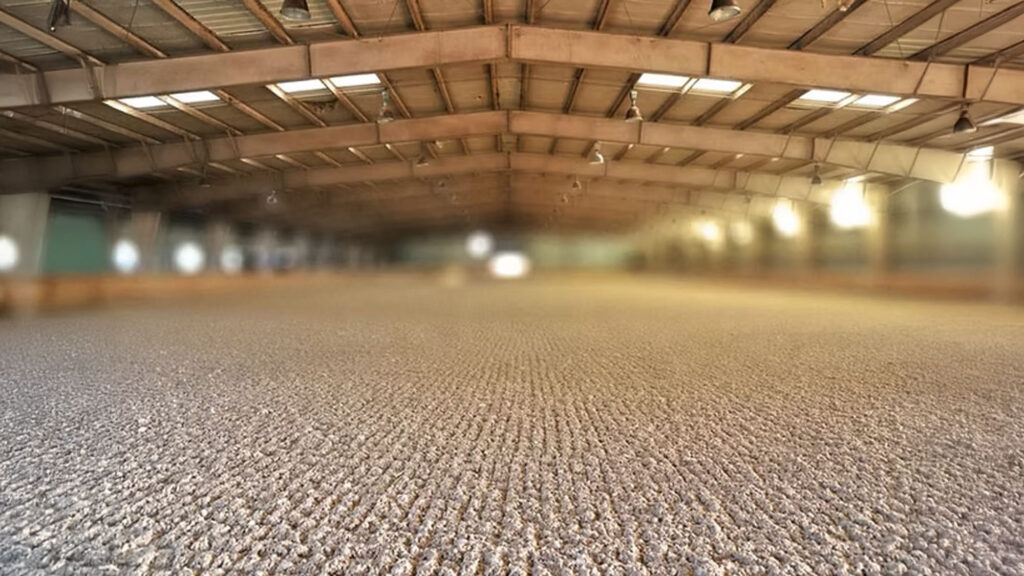
Is your arena becoming dustier, developing hard spots, or feeling deeper in some areas than others? Before adding material or planning a replacement, take a closer look at the surface you already have.
Assessing existing footing for horse arenas helps identify what is causing a performance issue. Uneven depth, inconsistent watering, unsuitable sand, and drainage problems can produce similar symptoms—but require different solutions. Many arenas can benefit from targeted improvements rather than a complete rebuild.
Begin with a walk around the entire arena, not just the track you use most often. Inspect the rail, corners, centerline, and frequently used training areas.
Look for:
Make a simple sketch and mark where each issue occurs. Note whether the problem appears before grooming, after riding, or following rainfall. This creates a useful record for comparing conditions after adjustments.
The priority is consistency. A surface that changes noticeably from one section to another needs closer evaluation, even if individual areas appear acceptable on their own.
A level-looking arena does not necessarily have an even riding layer. Grooming and regular use can move material away from busy areas and leave excess footing along the edges.
Use an appropriate depth gauge or measuring tool to check several locations, taking care not to damage the base. Include:
Compare your measurements with the specifications for your installed footing system. The appropriate depth depends on the surface materials and intended use, so avoid treating a single depth recommendation as suitable for every arena.
If existing material has shifted, redistribution may be the first step. Where material is genuinely lacking, a compatible top-up may help—but recurring low spots can also point to an underlying base problem.
Moisture affects how footing holds together and responds underfoot. Too little water can leave a surface loose and dusty, while excessive moisture can make it heavy or unstable.
Assess the arena at different points in your normal watering cycle. Ask:
Uneven results may indicate a coverage or scheduling problem rather than worn-out footing. Review sprinkler coverage, watering duration, weather conditions, and arena use before assuming that the material needs replacement.
Dust alone is not enough to identify the cause. Persistent dust may require a closer assessment of both moisture management and the existing sand.
Before introducing new sand or textile fibers, determine whether the existing materials are suitable for the result you want.
Sand characteristics influence stability, drainage, moisture behavior, and how the riding layer responds to use. Adding an amendment without evaluating the sand can leave the original problem unresolved. Professional sand analysis is a useful starting point when planning an arena refresh or new blend.
During your initial inspection, note whether:
These observations help guide a professional assessment, but they do not replace material testing. GGT Footing textile additives should be selected for compatibility with the existing sand, rather than treated as a universal fix for any riding surface.
Sometimes the maintenance routine needs attention before the footing does.
An arena conditioner should redistribute and blend the riding material without digging into the base. Repeatedly following the same route can also contribute to uneven material distribution, leaving some areas overworked and others neglected.
Review these questions:
Make controlled adjustments and monitor the results. Correcting grooming depth or changing the route may help address recurring unevenness without adding material. Avoid dragging deeply into the base, particularly when conditions are wet.
The riding layer cannot compensate for every issue underneath it. Persistent puddles, recurring depressions, or areas that remain wet may indicate drainage or base problems rather than a surface-material issue.
After rainfall, observe where water collects and how the arena dries. Check accessible edges and drainage routes for obstructions, and note whether the same sections repeatedly lose material or develop low spots.
Seek a professional assessment if you notice:
Replacing the riding layer without addressing these problems may leave the arena with the same performance issues. Significant base deterioration or drainage failure can require more extensive work than a footing refresh.
Once you have reviewed the surface, materials, and underlying conditions, use the findings to guide your next step.
Start with maintenance when the main issues involve displaced material, uneven moisture, or unsuitable grooming practices. Correcting those factors may improve consistency without changing the footing blend.
A refresh may be appropriate when the existing arena is fundamentally sound but needs compatible material added, the blend rebalanced, or footing depth restored. Evaluate the sand before choosing an additive, and integrate any new material according to the system’s requirements.
Replacement may be necessary when the existing materials cannot provide the required performance. More extensive renovation may be needed if significant base or drainage problems are preventing a consistent surface. A professional evaluation can help distinguish between these situations before you commit to the work.
An effective assessment does more than identify worn footing. It helps explain why the surface is changing and which improvements are most likely to address the cause.
Keep your depth measurements, photographs, maintenance notes, and observations together. Compare conditions after appropriate adjustments rather than judging the arena from a single inspection.
At GGT Footing, we help arena owners evaluate their existing sand, surface blend, base, and drainage to identify suitable improvements. Whether your arena needs maintenance changes, a compatible textile addition, or a broader renovation plan, start with an assessment of what is already there.