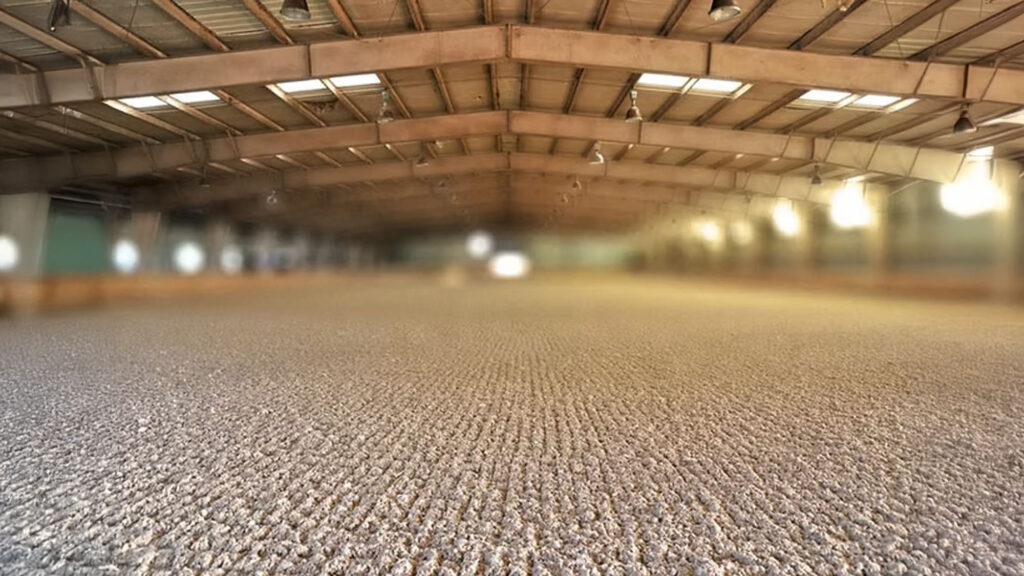
When it comes to protecting your horse’s joints and ligaments, what’s underfoot matters more than you might think. The right arena footing doesn’t just improve performance—it plays a critical role in reducing concussion, supporting movement, and helping prevent long-term wear and tear.
But with so many footing options available, how do you know what actually supports joint health?
Every stride your horse takes creates impact. Without proper shock absorption and stability, that impact travels up the limb—affecting joints, tendons, and ligaments over time.
Well-designed footing helps to:
Poor footing, on the other hand, can contribute to joint fatigue, uneven loading, and a higher risk of injury.
Not all arena footing is created equal. The best surfaces are carefully engineered blends of materials that work together to balance cushion, stability, and traction.
Sand is the foundation of most arena footing systems. However, not all sand performs the same.
Look for sand that is:
The wrong sand can lead to excessive movement, instability, or compaction.
Fiber materials—like those used in GGT Footing—help bind the sand together and create a more stable, resilient surface.
Benefits of fiber include:
This added structure supports joints by minimizing strain caused by inconsistent footing.
Moisture plays a major role in how footing performs. Too dry, and you’ll get dust and loose footing. Too wet, and the surface can become heavy and compacted.
An ideal footing system:
Footings with textile blends often help regulate moisture more effectively than sand alone.
Even the best materials won’t perform if they’re not installed correctly.
Key considerations include:
Incorrect depth is one of the most common causes of joint strain, as it can lead to either excessive concussion or instability.
Different disciplines place different demands on footing, which can impact joint health.
Choosing a footing system that aligns with your primary use will help reduce unnecessary strain on your horse.
If your footing isn’t performing correctly, your horse may feel the effects.
Watch for:
These issues often indicate that your footing needs adjustment—or a more supportive composition.
Choosing the best horse arena footing for joint health is ultimately an investment in your horse’s longevity. A well-balanced surface supports performance today while helping prevent injuries tomorrow.
With advanced fiber technology and engineered blends, GGT Footing is designed to provide the consistency, support, and durability that both horses and riders rely on—ride after ride.