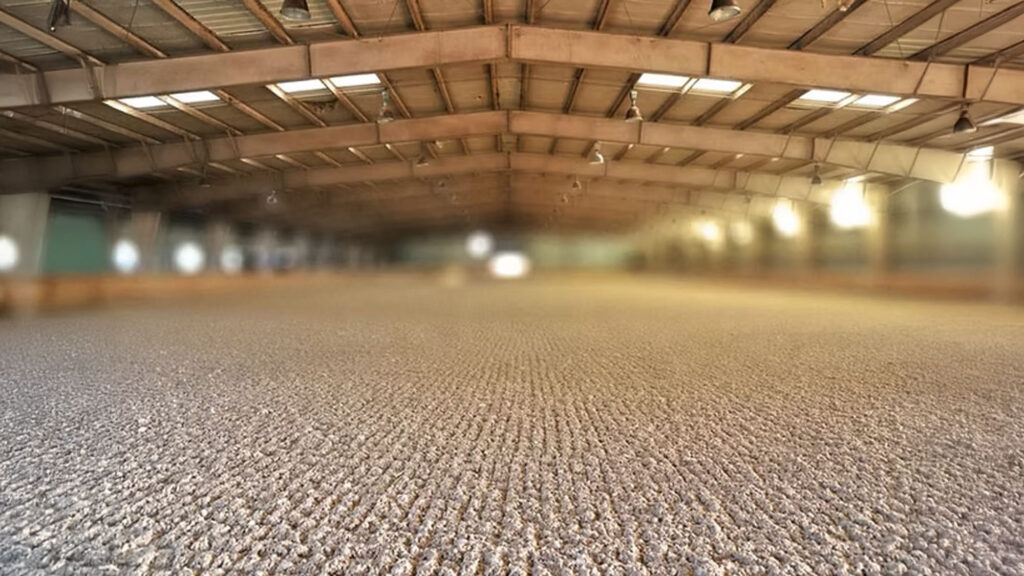
Heavy rain can expose problems that are easy to overlook in dry weather. Low spots collect water, uneven footing becomes more noticeable, and drainage issues can leave an outdoor arena unusable long after the storm passes. Preparing ahead of time starts with checking drainage, maintaining an even surface, and adjusting your maintenance routine to the conditions.
At GGT Footing, we encourage arena owners to look at the whole system—not just the riding layer. Footing materials, base construction, water management, and regular care must work together to support consistent performance in changing weather.
Here is how to prepare your horse arena before heavy rain and assess the surface afterward.
Before the forecast turns wet, inspect your arena’s drainage routes. A properly designed base should direct water toward drainage channels or collection points, or allow it to move through permeable layers into an appropriate drainage system. The right approach depends on your arena’s construction.
Walk the perimeter and look for:
Clear accessible debris and address obvious runoff problems before rain arrives. Persistent drainage issues deserve a closer evaluation of the arena’s grading, base, and drainage design rather than repeated surface repairs.
Corners, rail lines, and jump approaches experience concentrated wear. Regular use can redistribute footing and leave uneven areas that need attention before wet weather. GGT Footing recommends monitoring these locations as part of routine arena maintenance.
Check for shallow areas, ridges, depressions, and places where footing has collected. Routine grooming can redistribute displaced material and restore a more uniform riding layer. However, a depression that keeps returning may indicate a problem below the footing.
Avoid treating every low spot by simply adding more material. If the base is uneven or poorly drained, extra footing will not correct the underlying cause. Recurring puddles or soft spots are a reason to assess the foundation.
Before heavy rain, focus on maintaining an even footing layer—not aggressively working the arena. Regular dragging helps redistribute materials, address minor compaction, and reduce uneven wear. Drag depth should match the footing type and surface condition.
For fiber footing, use equipment suited to the blend and follow the recommended settings. The goal is to maintain consistent material distribution and depth while avoiding unnecessary disturbance of the layers beneath the riding surface.
A practical pre-rain grooming routine includes:
Learn more about equipment selection in Best Horse Arena Drag for Fiber Footing Horse Arenas.
Footing needs balanced moisture. Too little water can make the surface dusty and unstable, while too much can create heavy, slick, or inconsistent areas. With heavy rain approaching, reassess irrigation rather than automatically following your usual watering schedule.
Check the arena’s existing moisture and account for expected rainfall when deciding whether additional watering is needed. An already wet surface should not receive unnecessary irrigation, but a forecast alone is not a substitute for checking actual conditions. Moisture management should respond to the footing’s condition.
Remove manure and other organic material as part of your pre-storm maintenance. Keeping the riding layer clean helps prevent contamination and supports the long-term condition of the footing.
Use the same inspection to check accessible drainage areas for leaves or other obstructions. Surface care and water management are connected: a well-maintained riding layer still depends on clear drainage routes and a functioning foundation.
Footing materials influence stability, moisture behavior, and surface consistency. Compatible textile additives can be part of an improved arena system, but they cannot make up for poor drainage or inadequate base construction. Even high-quality materials can become saturated or uneven when the foundation does not perform properly.
If your arena struggles after every substantial rain, consider whether the issue involves:
Before investing in a new blend, evaluate the existing sand, drainage behavior, and maintenance capabilities. Read Material Selection for Horse Arena Footing for guidance on how these factors influence material choices.
Preparation does not end when the rain stops. GGT Footing recommends checking for drainage problems and material displacement after heavy rainfall. Look for standing water, newly formed depressions, washed or shifted footing, and areas that feel noticeably different from the rest of the surface.
Do not judge readiness by appearance alone. Wet footing can become heavy and inconsistent, and recurring soft areas may indicate underlying drainage or support problems. Base riding and maintenance decisions on the condition of the entire arena—not simply whether the puddles have disappeared.
If conditions are unsuitable, pause use and seek guidance from your footing supplier or arena contractor before attempting major corrective work. A persistent problem may require base or drainage repairs rather than additional dragging.
If the same areas puddle after every storm, pre-rain grooming is only part of the solution. Long-term improvement may require correcting base irregularities, improving drainage, or rebalancing footing materials. The appropriate work depends on what is causing the problem.
An all-weather arena is a coordinated system, not a surface that is unaffected by weather. Thoughtful construction and responsive maintenance help the arena manage changing conditions more effectively.
GGT Footing’s textile components help retain and distribute moisture throughout the riding layer. With suitable sand and proper maintenance, this supports more even moisture conditions and dependable traction. An arena construction specialist also describes properly installed GGT surfaces as capable of performing in wet weather when supported by a well-designed, well-drained base.
The important distinction is that moisture retention and drainage serve different purposes. GGT Footing helps manage moisture within the riding layer, while the arena’s base and drainage system must move excess rainwater away. The additive alone does not make an arena floodproof or guarantee immediate riding after a storm.