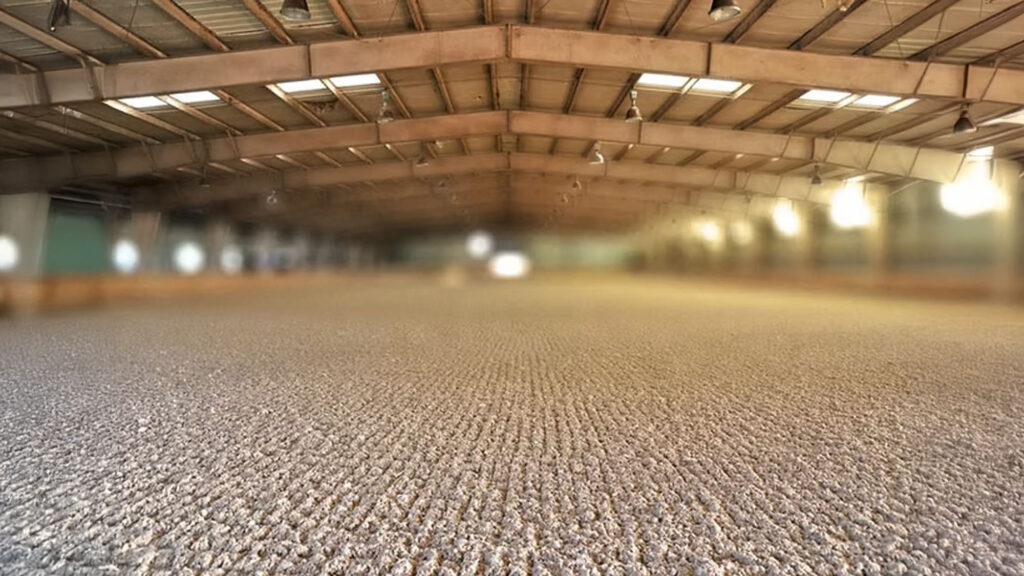
Water is essential to maintaining consistent, rideable horse arena footing. The right moisture level can reduce dust, help footing stay more stable under hoof, and support a more predictable surface for horses and riders.
However, there is no single best irrigation system for every arena. The right option depends on whether your arena is indoor or outdoor, its size, your footing type, available water supply, climate, budget, and how often the arena is used.
Most arena footing needs some level of moisture management to perform at its best. When footing becomes too dry, fine particles can become airborne and create dust. Dry footing may also feel loose, shift more easily, and become less consistent across the riding surface.
Appropriate watering can help:
Watering should be balanced. Too little moisture can lead to dusty, loose footing, while too much water can make the surface heavy, compacted, or slick. Regularly evaluating the arena surface is the best way to determine whether watering practices need adjustment.
Overhead sprinklers are one of the most popular irrigation systems for horse arenas. Sprinkler heads may be installed around the arena perimeter, mounted on posts, or attached to the rafters in an indoor or covered arena.
The system distributes water across the surface from above, often through multiple zones. Many arena owners use timers or programmable controllers so the arena can be watered before riding begins, between lessons, or overnight.
Overhead sprinkler systems require thoughtful design. Poor spacing, low water pressure, or incorrect sprinkler heads can create dry zones or oversaturated areas. In regions with freezing temperatures, exposed water lines may also need seasonal winterization.
Traveling sprinklers move across the arena as they water. Depending on the model, they may travel along a cable, hose, track, or rail system. They are commonly used when an arena owner wants more coverage than a single portable sprinkler can provide but does not want to install a full permanent overhead system.
Traveling sprinklers can be effective, but they generally require monitoring. Wind, uneven terrain, obstacles, or changes in water pressure can affect coverage. They may also take longer to water the entire arena than a permanent multi-zone sprinkler system.
Water cannons, sometimes called big-gun sprinklers, apply water over a wide area using a high-pressure stream. They are typically used in outdoor arenas, large rings, warm-up areas, and facilities that need to cover substantial ground quickly.
A water cannon may be mounted on a stand, connected to a hose reel, or moved to different locations around the arena.
Because water cannons use high pressure, they need to be positioned and adjusted carefully. Wind can affect their spray pattern, and the force of the water may create uneven moisture if the system is left in one location for too long.
Portable hose-end sprinklers and manual watering are simple options for smaller arenas or facilities with limited watering needs. A portable sprinkler can be moved around the arena, while a hose and spray nozzle can be used to target dry areas along the rail, in corners, or where horses tend to work most often.
The tradeoff is time and consistency. Manual watering can be labor-intensive, and it may be difficult to apply the same amount of water evenly throughout a full-size arena. For high-use facilities, manual watering is often best used as a supplemental solution rather than the only irrigation method.
Water trucks, tractors with tank sprayers, and trailer-mounted water tanks apply water directly to the footing while driving across the arena. This approach is common at large outdoor facilities, horse shows, and remote locations where permanent irrigation lines are not available.
Many water tank setups use a spray bar that distributes water over a set width behind the vehicle.
Water trucks require a dependable water source, vehicle access, equipment maintenance, and labor. Because vehicles travel over the footing, arena managers should follow watering with appropriate grooming to maintain a level and consistent surface.
Subsurface irrigation delivers water beneath the footing through buried lines or specialized water-management systems built into the arena base. These systems can be integrated during arena construction and may work alongside drainage components to help manage moisture throughout the surface.
Subsurface irrigation is typically more complex and costly than other systems. It should be planned with the arena base, drainage design, and footing choice to ensure every layer of the arena works together.
Before selecting a system, consider:
For example, a small private outdoor arena may do well with portable sprinklers and consistent grooming. A busy indoor lesson arena may benefit from an automated overhead system. A large outdoor facility may use a water truck in addition to permanent sprinklers for high-traffic or especially dry periods.
Irrigation is an important part of arena maintenance, but it is most effective when combined with dragging, footing-depth management, proper drainage, and regular surface evaluation.
The way your arena holds water depends on its footing blend, base construction, weather exposure, and usage. Building a maintenance plan around those factors can help create a more consistent, comfortable surface for everyday riding and training.
GGT Footing helps arena owners select footing systems designed around their facility, discipline, climate, and maintenance goals. Contact our team to discuss footing options and create a plan for a dependable riding surface.