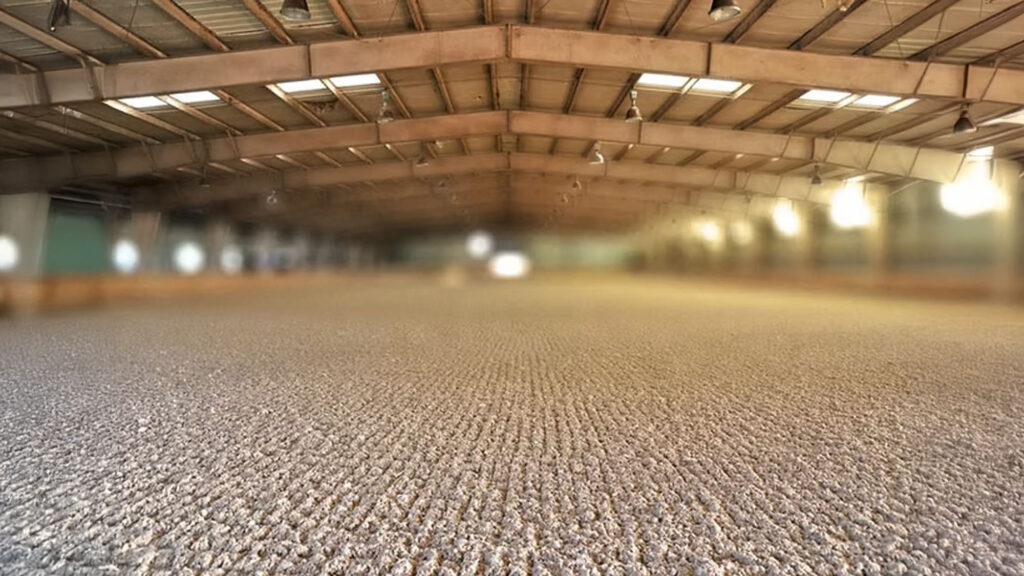
Creating the perfect riding surface begins with one critical factor—moisture control. In horse arenas, maintaining the right moisture balance isn’t just about keeping dust down; it’s essential for safety, longevity, and performance. Proper hydration of footing materials ensures stability, prevents compaction, and helps riders and horses perform at their best.
When footing becomes too dry, it loses cohesion, creating uneven surfaces that generate dust and increase the risk of injury. Conversely, excessive moisture can make footing heavy, slippery, and unstable. The key lies in consistent moisture levels that complement the type of footing material in use—whether sand, fiber blends, or specialty footing like GGT Footing.
GGT Footing is designed to help arenas maintain optimal water balance while offering superior traction and cushioning. The fibers work within the sand matrix to retain moisture longer, reducing dust and minimizing the need for frequent watering. The result is a reliable surface that adapts to high-performance needs yet remains safer for both horses and riders.
When moisture is managed effectively, arenas not only stay safer but also perform at a higher level. Consistency underfoot builds rider confidence and allows equine athletes to focus on movement rather than footing. Investing time in moisture control is, ultimately, an investment in better rides and longer-lasting arena surfaces.