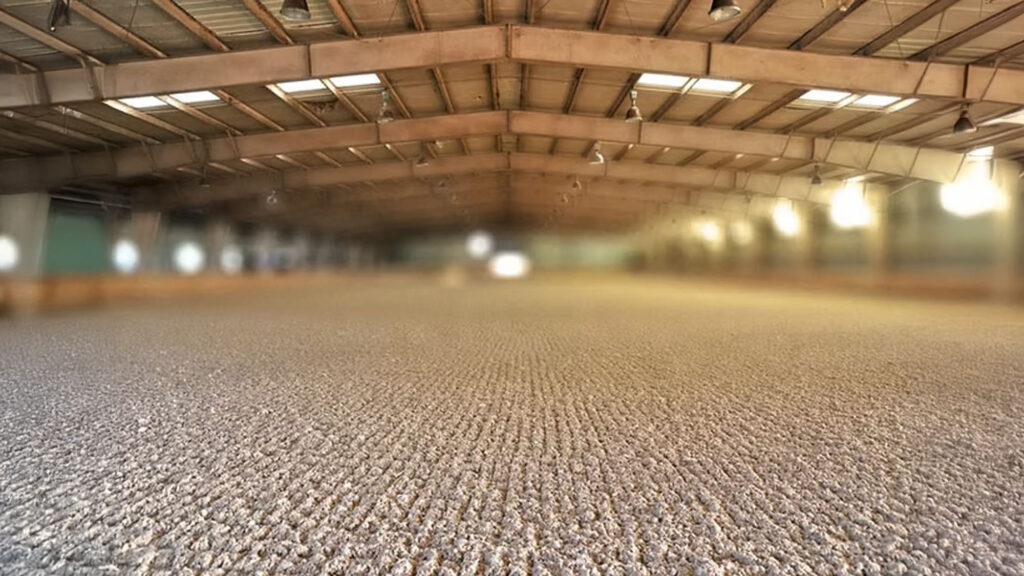
The best equestrian surfaces are not built in a day, and they are rarely perfect right out of the gate. In the real world, arenas face heavy traffic, changing weather, shifting moisture levels, and the everyday wear that comes from consistent riding. That is why the most successful footing systems are the ones that can be improved over time with thoughtful upgrades.
Whether you manage a private riding arena, a training facility, or a busy show environment, small changes can make a big difference in how your surface performs. The key is knowing which upgrades will improve the ride, which ones will extend the life of the footing, and which ones will help the arena stay more consistent from season to season.
Before making upgrades, look closely at how the surface behaves during use. A good arena usually gives you clear signals when something needs attention. You may notice dust in dry conditions, soft spots after watering, hard areas where the footing has compacted, or sections that ride differently from one end of the arena to the other.
These issues do not always mean you need to rebuild from scratch. In many cases, the surface simply needs targeted improvement. The goal is to understand whether the problem is with the footing itself, the base underneath it, or the maintenance routine that is being used to manage it .
One of the most effective ways to improve an arena surface is by adding the right footing materials to the existing mix. Additives can help create a more stable, more consistent, and more forgiving ride without requiring a complete overhaul. For many facilities, this is the most practical upgrade because it builds on what is already there.
Fiber blends are especially useful when the footing needs more structure and cohesion. They can help reduce dust, improve traction, and support a more even feel across the arena. Depending on the existing sand and base, the right additive can also help the footing stay in place better during use, which means fewer problem areas develop over time.
Sometimes the footing gets blamed when the real issue is underneath it. If the base is uneven, poorly graded, or holding water in the wrong places, no surface material will fully solve the problem on its own. That is why one of the smartest upgrades is often a base correction rather than a simple top layer adjustment.
Regrading, repairing drainage, or correcting low spots can dramatically improve how the arena performs. These changes are not always visible from the saddle, but they have a major impact on consistency, safety, and long-term footing durability. In many cases, a stronger base means less maintenance and fewer issues later.
Not every arena needs the same solution. A private dressage arena, a jumping ring, and a high-traffic lesson facility all have different demands. That is why the best upgrade is the one that fits the way the arena is actually used, not just the way it looks on paper.
A low-traffic arena may benefit from moisture control and periodic top-offs. A busier facility may need more structure in the footing and a maintenance plan that can handle constant use. Facilities in drier climates may focus on dust control, while wetter regions may need better drainage and more attention to base stability.
Even the best footing system will underperform if it is not maintained correctly. Regular grooming, moisture management, and monitoring depth are all part of keeping an arena in top condition. In other words, maintenance is not separate from the upgrade process — it is what helps the upgrade last.
This is where many arenas lose performance over time. The footing may start out in great shape, but without a consistent plan, it can compact, separate, or become uneven. A well-managed surface stays more reliable and helps protect both horses and riders from inconsistent conditions.
The smartest arena upgrades are the ones that improve performance now and reduce problems later. That might mean adding fiber, correcting the base, improving drainage, or simply updating your maintenance routine so the footing stays more consistent through heavy use.
At GGT Footing, we believe the best equestrian surfaces are built through practical decisions, not shortcuts. Real-world upgrades should support better rideability, lower maintenance stress, and a surface that holds up to daily demands. When the footing works the way it should, everything from training to competition runs more smoothly.