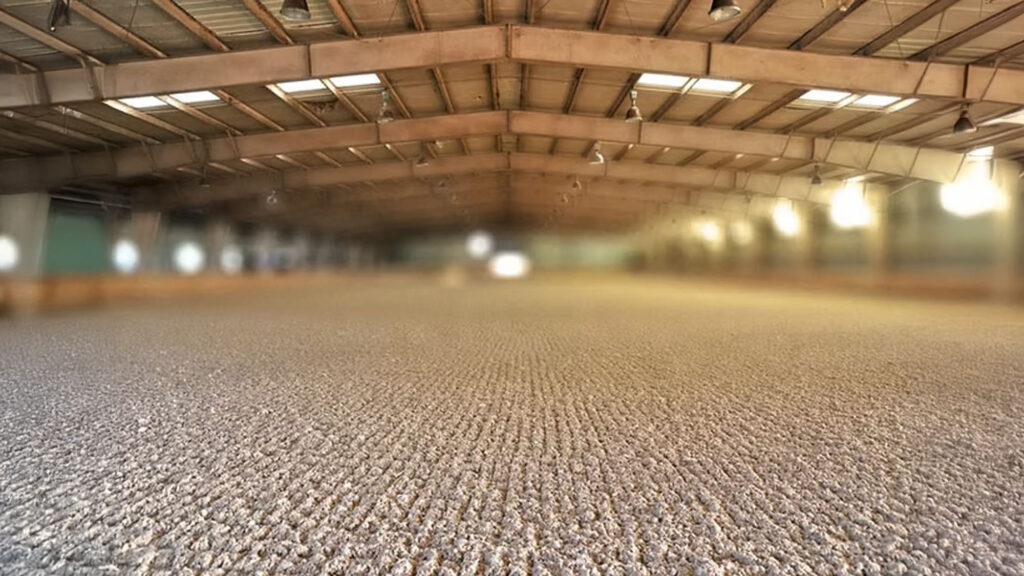
Sustainability is becoming a defining priority for modern equestrian facilities. From energy-efficient barns to responsible land management, horse owners and facility managers are seeking ways to reduce their environmental impact without compromising performance. One of the most effective places to start is the arena surface itself.
Sustainable arena design focuses on long-lasting materials, reduced resource consumption, and innovative solutions—like the use of repurposed textiles in footing systems.
Sustainable arena design goes beyond initial construction. It considers the full lifecycle of materials, including how they are sourced, used, and maintained over time.
In equestrian arenas, this often means selecting footing systems that:
By making thoughtful choices at the foundation level, facilities can significantly reduce their environmental footprint.
One of the most innovative advancements in eco-friendly arena footing is the use of repurposed textile fibers. These materials are carefully processed and engineered to blend with sand, creating a high-performance riding surface.
At GGT Footing, these fibers are designed to:
By giving new life to existing materials, repurposed textiles help reduce waste while delivering functional benefits for both horse and rider.
Traditional arena surfaces often require frequent watering to control dust and maintain consistency. This can lead to high water usage, especially in larger facilities or dry climates.
Footing systems that incorporate textile fibers improve moisture retention, allowing arenas to:
This not only supports sustainability goals but also lowers ongoing maintenance demands.
A key component of sustainable arena design is durability. Surfaces that break down quickly require frequent replacement, increasing both cost and environmental impact.
By stabilizing the footing and reducing separation, textile-enhanced systems:
This long-term performance makes them a practical and eco-conscious investment.
Sustainable arena design is an important step toward building greener equestrian facilities. When combined with other practices—such as efficient drainage systems, responsible water use, and thoughtful site planning—it contributes to a more environmentally responsible operation.
Choosing footing that incorporates repurposed textiles aligns with these goals, offering a balance of performance, durability, and sustainability.
As the equestrian industry continues to evolve, sustainable solutions are becoming the standard rather than the exception. Arena footing plays a central role in this shift, providing an opportunity to reduce environmental impact while improving ride quality.
By integrating repurposed textile materials into arena design, facilities can create surfaces that are not only high-performing but also aligned with long-term sustainability goals.