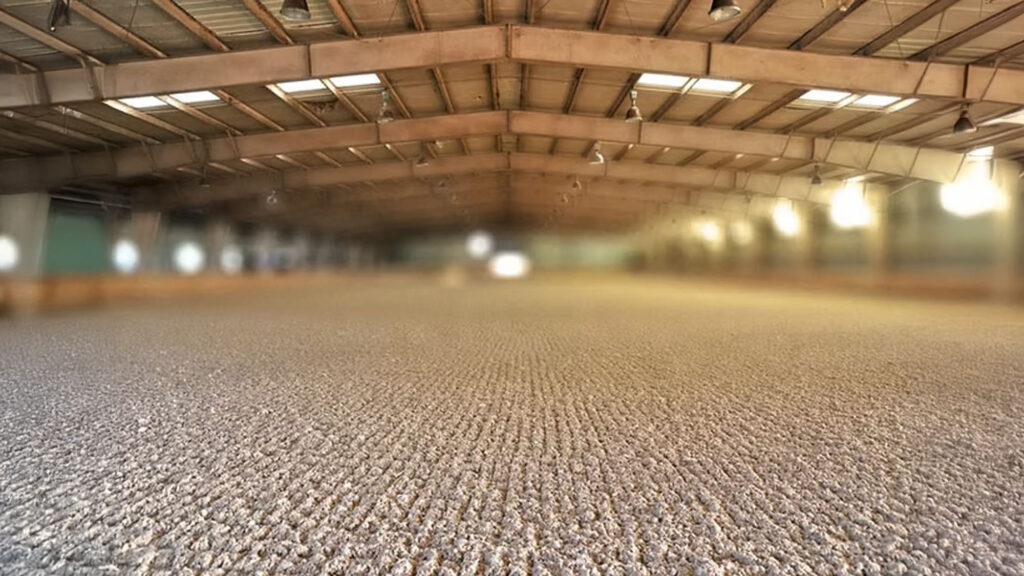
A great riding arena is not defined by what you see on the surface alone. The sand, fibers, or blend under your horse’s hooves matter—but so do the layers below, the way water moves through the arena, the consistency of the footing depth, and the maintenance routine that keeps it performing day after day.
Whether you are building a new arena, updating an existing surface, or trying to improve the ride in a high-use ring, understanding these often-overlooked details can help you create safer, more consistent footing for horses and riders.
It is easy to focus on the visible footing layer, especially when an arena feels dusty, deep, hard, or uneven. But the base beneath the footing has a major effect on long-term performance.
A typical arena system includes:
The base provides structural support and helps maintain a consistent riding surface. If it is uneven, unstable, poorly compacted, or unable to move water effectively, the footing above it may become saturated, compacted, or inconsistent—even when high-quality materials are used. A sound foundation helps protect the investment made in the arena’s top layer and makes it easier to maintain a reliable footing depth over time.
Water is one of the most important variables in any horse arena. Too much water can create slick areas, soft spots, and standing puddles. Too little moisture can lead to dust, reduced cohesion, and a surface that feels loose or hard.
Effective drainage is not just about keeping an outdoor arena usable after rain. It is also about protecting the base and allowing the entire footing system to perform more consistently throughout changing weather conditions.
When water cannot move away from the arena properly, it can weaken the base and cause low spots, uneven footing, and frequent surface corrections. In dry weather, moisture management becomes just as important. Sand that dries too quickly may require more frequent watering to control dust and maintain the intended feel underfoot.
For many arena owners, the goal is not to keep the footing wet at all times. The goal is to maintain an even moisture level that supports the surface’s stability, cushion, and rideability.
There is no single footing material that is right for every arena. The ideal surface depends on the discipline, horse-and-rider traffic, location, climate, existing sand, and maintenance resources.
Sand is often the foundation of an arena footing blend, but sand varies widely in particle shape, size, drainage behavior, and compaction characteristics. The wrong sand—or an incompatible material added to it—can create a surface that becomes too deep, slippery, dusty, or difficult to maintain.
GGT Footing textile fibers and blends are designed to be mixed with compatible sand to support stability, cushion, and moisture retention. The fibers help create a more connected surface, allowing the sand and textile components to work together rather than behaving as separate materials. This can help the arena maintain a more consistent feel while reducing rapid compaction and excessive dust.
Before selecting or refreshing footing, consider:
The best footing system is not simply the one with the most materials added. It is the one designed around the arena’s existing conditions and maintained for the way it is used.
Footing depth affects how a horse experiences the surface. When footing is too shallow, the base may become exposed or the arena may feel firm and unforgiving. When it is too deep, horses may have to work harder to move through the material, especially in high-traffic areas such as corners, rail lines, jump approaches, and landing zones.
Depth can also vary throughout the arena. Riders may notice that one end feels deep while another feels hard, or that material gradually moves toward the rail. These differences often develop slowly, which is why regular observation matters.
Walking the arena is a simple but valuable habit. Look for changes in texture, moisture, depth, and compaction. Pay attention to the locations where horses repeatedly travel, turn, take off, or land. Catching small inconsistencies early can prevent more extensive corrections later.
Even a well-designed arena needs ongoing care. Footing is not a set-it-and-forget-it purchase; it is a working surface that responds to weather, traffic, equipment, and moisture.
A practical maintenance routine often includes:
Grooming should match the arena’s footing blend and level of use. Dragging too aggressively or too deeply can pull material away from high-use zones or disturb the base. On the other hand, infrequent grooming can allow compaction and unevenness to develop. Regular dragging helps keep footing uniform, while consistent moisture management helps prevent dry, dusty conditions or overly wet, unstable areas.
The best horse arena footing is the result of a complete system—not just a top layer of sand or fiber. The base supports the arena. Drainage protects it. Compatible materials help shape the ride. Consistent depth supports a more uniform surface. And routine maintenance helps preserve the performance riders and horses depend on.
At GGT Footing, we look at the full picture: your existing sand, arena base, drainage behavior, climate, riding discipline, and maintenance routine. By paying attention to the hidden details beneath and within the surface, you can make informed decisions that support a safer, more consistent arena for years to come.