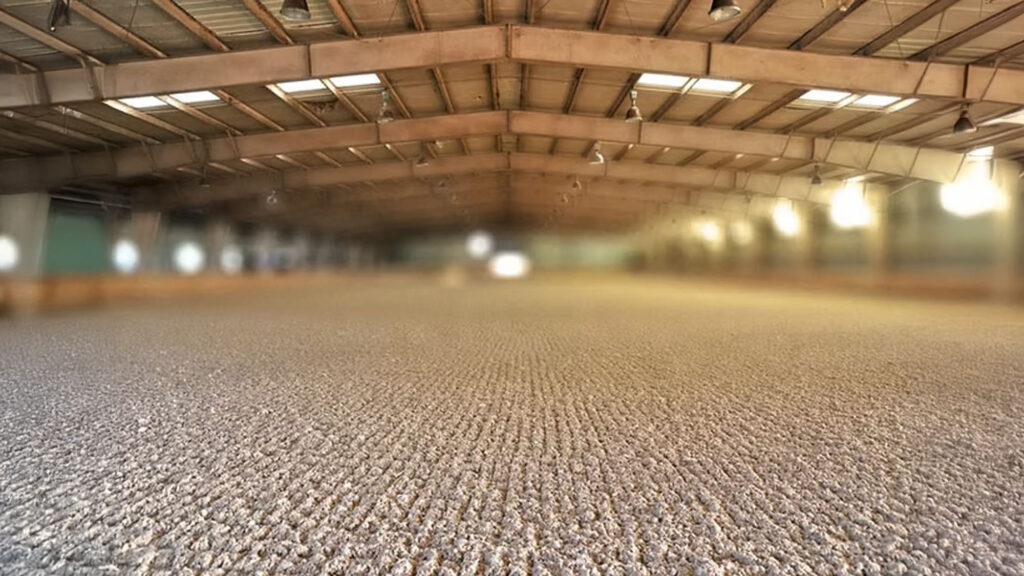
A horse arena can look fine on the surface and still ride differently from one day to the next. That inconsistency often comes from hidden factors beneath the footing, not just the footing itself. If the ride quality changes with weather, traffic, or moisture, the real issue may be in the arena’s foundation, drainage, or maintenance routine.
Variable ride quality usually has a cause, even if it is not immediately visible. Some arenas feel deep in one area and firm in another. Others become slippery after rain, dusty in dry weather, or uneven after heavy use. These changes are often tied to how the arena is built and how well it manages moisture and wear.
When footing is inconsistent, horses may adjust their movement to compensate. That can affect balance, confidence, and performance. Riders notice it too, especially when the same arena feels different from one session to the next.
A poor base can create a long list of surface issues. If the arena floor is not properly graded or compacted, footing may shift, settle, or hold water unevenly. That can lead to soft spots, hard areas, and inconsistent support across the arena.
Because the base sits underneath the footing, it is easy to overlook. But it has a major effect on how the surface rides. A strong base helps keep the arena more uniform and easier to maintain over time.
Water management is one of the biggest hidden causes of changing ride quality. If the arena cannot drain properly, moisture may pool in some areas while others dry out too quickly. That imbalance can affect traction, cushioning, and overall safety.
Even small drainage problems can create noticeable differences in how the footing feels. After rain, an arena may ride heavier or more unstable than expected. In dry conditions, poor drainage can also make it harder to maintain the right moisture balance.
Footing alone cannot solve a weak foundation. Even a high-quality footing material will not perform well if the base and drainage system are not supporting it. The material needs to work with the arena structure, not against it.
Different footing types behave differently under pressure and moisture. Some hold shape better, while others require more careful upkeep. The right choice depends on the arena’s use, the local climate, and how much traffic it receives.
Routine maintenance plays a bigger role than many people realize. Dragging, watering, and monitoring the surface can keep ride quality more stable. But if the arena needs constant correction, that may be a sign of deeper structural issues.
A surface that only feels good right after maintenance may not be truly consistent. Good upkeep should support the arena, not mask recurring problems. If maintenance seems never-ending, it may be time to look below the footing layer.
The best way to improve ride quality is to focus on the whole system. That means starting with a stable, well-drained base, choosing footing that matches the arena’s use, and maintaining the surface regularly. When those pieces work together, the arena is more likely to stay even and predictable.
Consistency matters because it improves horse comfort, rider confidence, and long-term surface performance. It also reduces the need for frequent fixes and can help extend the life of the arena. In the end, the secret is not one product or one maintenance step — it is the way every layer supports the ride.
Ready to upgrade your arena? Connect with us today.