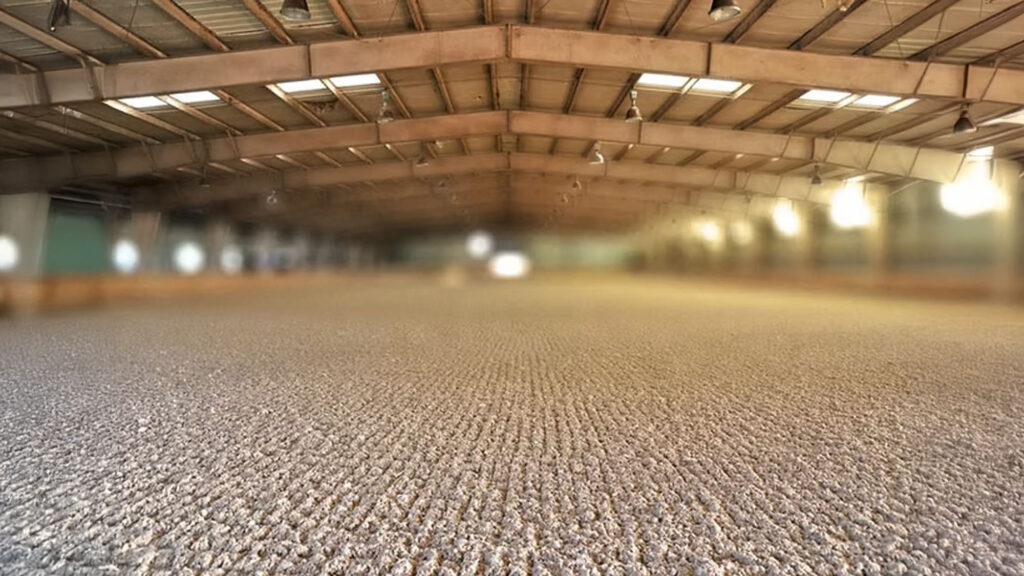
Cheap horse arena footing isn’t a bargain. Find out the true 5–10 year cost, from frequent repairs to higher water bills and injury risks.
When you’re building or upgrading an arena, low-cost footing can look like an easy way to save. But over 5–10 years, that “bargain” often becomes the most expensive part of your facility.
Basic sand or untested additives may cost less upfront, but they typically:
Over a decade, these ongoing costs—and the hidden expense of downtime and vet bills—can easily double or triple your initial savings.
Cheap footing loses moisture fast, especially in hot or dry climates. To keep dust down and the surface rideable, you end up watering more often—sometimes daily during peak season.
That adds up quickly in:
Engineered textile or fiber additives help the sand hold moisture longer, so the arena stays damp with less frequent watering. That alone can significantly reduce annual operating costs.
Inconsistent footing—deep in the corners, slick in takeoff zones, hard in others—forces horses to compensate with every stride. Over time, that increases concussion on joints and tendons, raising the likelihood of:
While fiber additives themselves don’t cause injuries, poor sand quality and unbalanced surfaces do. The cost of one significant injury—vet exams, imaging, rest, rehab, and lost training time—can exceed the price difference between cheap and premium footing in a single season.
For a standard 60×120-foot arena, cheap basic sand might cost around $6,000 to install, then need full replacement every few years plus higher annual maintenance. An engineered sand-and-fiber surface may cost more at the start but can last 10+ years with minimal top-offs and lower upkeep.
In many cases, the “cheap” option ends up costing thousands more over 10 years—before factoring in potential injury-related expenses.
The goal isn’t to buy the most expensive product—it’s to choose the most cost-effective over your actual timeline. For most facilities, that means:
Systems like GGT Footing are designed for this balance: long lifespan, reduced dust, better drainage, and consistent performance across disciplines and weather.
“Cheap” horse arena footing rarely stays cheap. Over 5–10 years, the cumulative costs of replacement, maintenance, water, and injury risk far outweigh the initial savings.
Investing in a well-engineered surface from the start gives you fewer replacements, lower water and labor costs, a safer riding surface, and better protection for your arena base—and your horses’ legs.
Looking to evaluate your current surface?
Consider a professional sand analysis or consult with a footing specialist to understand what your arena really needs to perform safely and cost-effectively for the next 10 years.