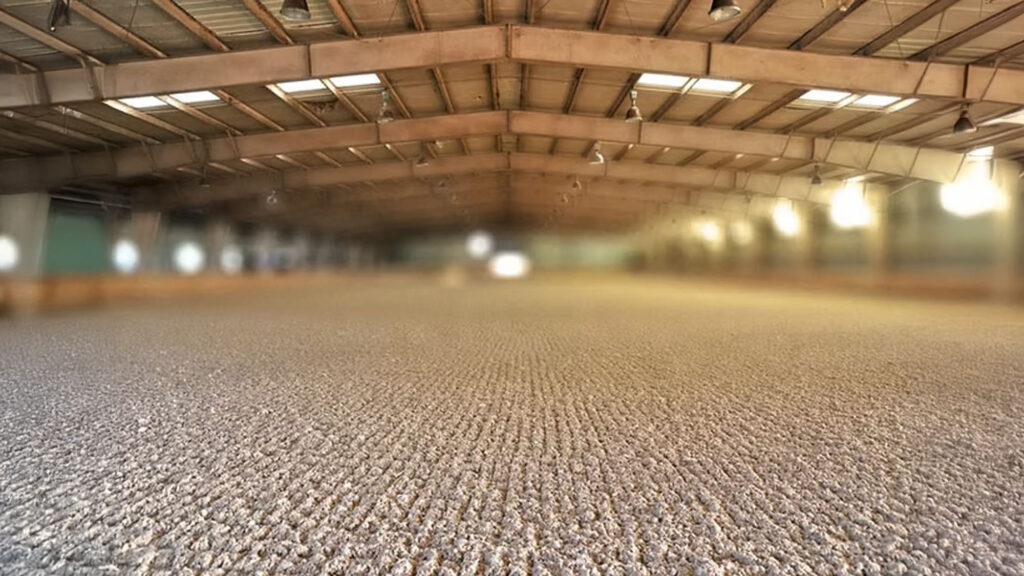
Keeping an arena surface level, consistent, and safe takes more than good footing alone. The right arena drag plays an important role in how sand and fiber footing performs over time, helping redistribute material, smooth out tracks, and maintain a rideable surface from one end of the arena to the other.
For arena owners, trainers, and facility managers, choosing the right drag is not just about convenience. It is about protecting the investment in the footing itself and supporting better performance every day. When a drag is matched to the footing type and the demands of the facility, it can make arena maintenance faster, easier, and more effective.
Arena drags are designed to break up compacted areas, blend footing materials, and help maintain a uniform surface. In sand and fiber footing systems, that function becomes even more important because the drag has to work without separating the mix or disturbing the balance that makes the footing perform properly.
A drag that is too aggressive can pull fiber and sand apart or create uneven depth. A drag that is too light may not address compaction or surface variation well enough. The right design helps keep the footing consistent while reducing the amount of labor needed to maintain the arena.
One of the most important features to look for in an arena drag is adjustability. Different footing conditions require different levels of penetration, and a drag with adjustable depth settings gives the operator more control. That flexibility is especially useful in arenas that experience changing moisture levels, frequent use, or multiple riding disciplines.
With adjustable depth, the drag can be set for light surface grooming on a daily basis or deeper penetration when the footing needs more thorough leveling. This helps prevent overworking the surface while still allowing the arena to recover from heavy use.
Sand and fiber footing works best when the materials stay evenly blended. A drag should be designed to mix and smooth without disrupting the structure of the surface. This is especially important in arenas where the footing has been carefully engineered for traction, cushion, and stability.
Look for drag features that support even distribution rather than aggressive cutting. A well-designed drag will help maintain consistency across the arena without creating ridges, waves, or soft pockets that can affect ride quality. The goal is to improve the surface, not undo the work that went into building it.
A good arena drag should be built to handle regular use in demanding conditions. Durable materials, strong welds, and quality hardware all matter because arena maintenance equipment is exposed to constant wear. If the drag is used frequently, especially in large or high-traffic arenas, lower-quality construction can lead to bending, breakdowns, or uneven performance over time.
Durability is not just about lifespan. It also affects how consistently the drag performs. A sturdy drag is more likely to stay level, maintain proper contact with the surface, and continue doing its job effectively across repeated passes.
Practicality matters when choosing equipment that will be used on a regular schedule. A drag should be easy to attach, simple to operate, and manageable for the tractor or utility vehicle that will pull it. If the equipment is too difficult to handle, it is more likely to be used inconsistently, and that can lead to uneven footing conditions.
Features like smooth towing, efficient turning, and straightforward setup can save time during daily maintenance. For busy facilities, ease of use often makes the difference between a drag that gets used correctly and one that creates more work than it solves.
Not every drag is suited for every footing type. Sand and fiber footing has its own maintenance needs, so compatibility should always be a top consideration. The drag should work with the texture, depth, and composition of the footing rather than fight against it.
This is especially true for arenas that use specialty footing blends. A drag that performs well on plain sand may not be the best choice for a surface with added fiber. Choosing equipment designed to support blended footing can help preserve the arena’s feel, stability, and long-term consistency.
Arena shape, size, and layout all influence how well a drag performs. In smaller arenas or facilities with tight corners, maneuverability becomes especially important. A drag should be able to cover the surface efficiently without missing edges or creating uneven transitions between heavily used and less used areas.
Good maneuverability also helps the operator make clean passes and maintain a more uniform riding surface. This is particularly valuable in arenas that host lessons, training sessions, or repeated daily work in the same patterns.
The best maintenance tools reduce work rather than add to it. A drag with low-maintenance design features can save time and reduce repair costs over the long term. That may include replaceable parts, easy cleaning, or simple adjustment mechanisms that do not require constant attention.
For busy barn owners and facility managers, low-maintenance equipment is often a smart investment because it supports a more efficient maintenance routine. The less time spent troubleshooting equipment, the more time can be spent keeping the arena in top condition.
A horse arena drag is more than a grooming tool. It is part of the system that keeps sand and fiber footing performing the way it should. The right drag should support footing balance, improve consistency, and make daily maintenance more effective without damaging the surface.
When evaluating arena drags, focus on adjustability, durability, footing compatibility, and ease of use. Those features help protect the arena investment and create better riding conditions over time. For facilities that depend on consistent performance, the right drag is a practical upgrade that pays off every day.
Ready to start conditioning your arena like the pros? Discover GGT Footing arena conditioners here.