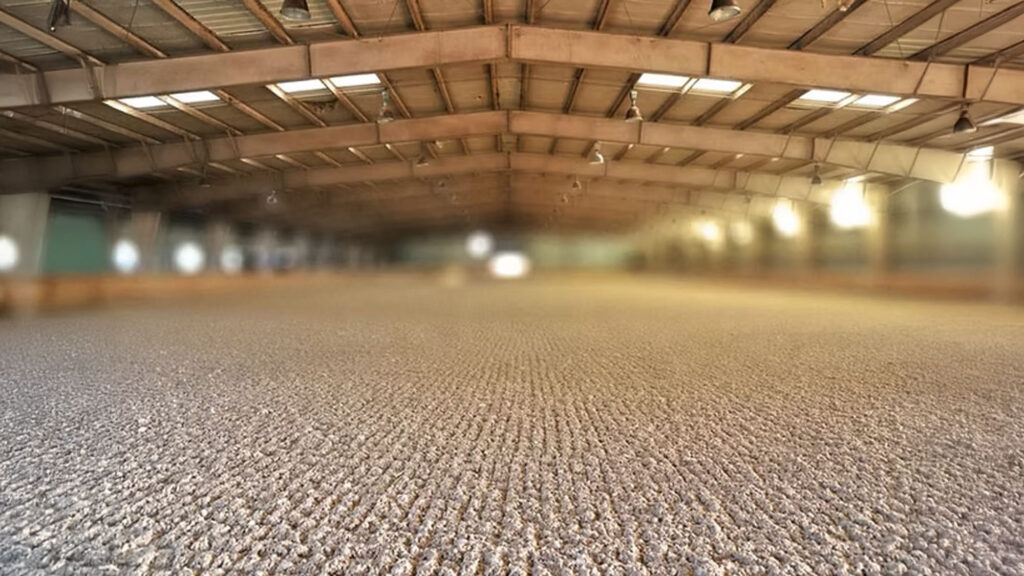
Equine arena footing is the surface layer horses move on during riding, training, and competition. Often made from sand or a blend of sand and other materials, it helps determine how the arena cushions impact, supports the hoof, and provides traction. A well-designed surface balances these qualities rather than simply making the ground softer.
Whether you are building a new arena or improving an existing one, understanding footing starts with looking beyond the material on top. The surface, base, drainage, and maintenance routine all work together to create dependable riding conditions.
Arena footing is not a single material or a one-size-fits-all recipe. Its performance depends on the materials selected, how they are blended, and how the finished surface is maintained.
Sand is a common primary material in horse arenas, but not all sand performs the same way. Particle characteristics and the condition of the sand influence how well the surface supports the hoof. Sand that has broken down or lost its grip can contribute to loose, unstable footing.
For a sand-and-fiber arena, choosing compatible sand is especially important. Textile additives are designed to work with the sand—not compensate for every problem in an unsuitable material.
Textiles and fibers can be blended into sand to help stabilize the surface and improve cushioning and traction. GGT Footing uses repurposed virgin polyester materials in its fiber and footing blends, offering options for facilities seeking a more consistent riding surface.
Proper mixing matters. If fibers become displaced or unevenly distributed, the surface can lose consistency. The blend needs appropriate grooming and moisture management to perform as intended.
Some arenas use rubber, organic materials, or coated sand-and-fiber mixtures. Each option brings different maintenance requirements. For example, some wax-coated mixtures do not require watering, while uncoated sand mixtures often need regular moisture management to control dust.
The right choice depends on the arena’s use, climate, and maintenance capabilities—not simply which material sounds most appealing.
Footing is the riding layer. The base and underlying construction provide the foundation beneath it. Both matter, but they serve different purposes.
A properly designed arena considers:
This distinction matters when troubleshooting an arena. Adding more footing may not resolve poor drainage or problems in the underlying construction. A surface assessment should consider the entire arena system rather than just the top layer.
Good footing is about balance. A surface needs enough cushioning to manage impact, enough support to limit excessive hoof penetration, and appropriate grip for the work horses perform. Consistency across the arena is just as important as how any individual area feels.
Softer is not always better. Footing should cushion the horse’s movement without becoming excessively deep or unstable. A properly selected and maintained sand-and-fiber blend can help balance cushioning with the support needed for training.
Horses need dependable grip when turning, transitioning, and jumping. Footing composition and condition influence that grip, which is why sand quality, additive distribution, and maintenance all deserve attention.
An arena that feels firm in one area and deep in another does not provide a uniform surface. Correct mixing, watering, leveling, and grooming help maintain consistency throughout the riding space.
Dry, uncoated sand and dirt mixtures often require watering to limit dust. Managing moisture is therefore part of managing footing—not an optional finishing touch. Some coated footing systems have different watering requirements, so the maintenance plan should match the material.
The concern is not simply whether an arena has a branded footing product. It is whether the surface provides suitable physical properties for the horses and activities using it. Equine surface research considers footing an important factor in supporting performance while minimizing injury risk, but no surface can guarantee injury prevention.
Common problems include:
These issues may reflect material selection, construction, maintenance, or a combination of all three. Addressing the underlying cause is more useful than repeatedly covering it with additional material.
Start with how the arena will be used and what your facility can realistically maintain. Different disciplines place different demands on the surface, and a footing system must also suit the local conditions and available equipment.usef+1
Before selecting a blend, consider:
There is no universal footing recipe or maintenance routine that fits every arena. Selection and care should reflect the specific surface system and its intended use.
Yes. Even a carefully designed arena needs ongoing care to retain its intended properties. Maintenance is as important as the material itself when it comes to maintaining uniform conditions.
Depending on the footing system, routine care may include:
Grooming depth also matters. In GGT Footing arenas, dragging too deeply can displace fibers or mix them unevenly, weakening the surface’s consistency. Equipment settings should suit the footing rather than follow a generic routine.
A successful arena starts with compatible materials and continues with appropriate construction and care. GGT Footing’s geotextile and fiber blends are designed to work with suitable sand to support stability, cushioning, and traction.
Planning a new arena or evaluating an existing surface? Contact GGT Footing to discuss your sand, riding needs, and maintenance setup—and explore a footing solution suited to your facility.