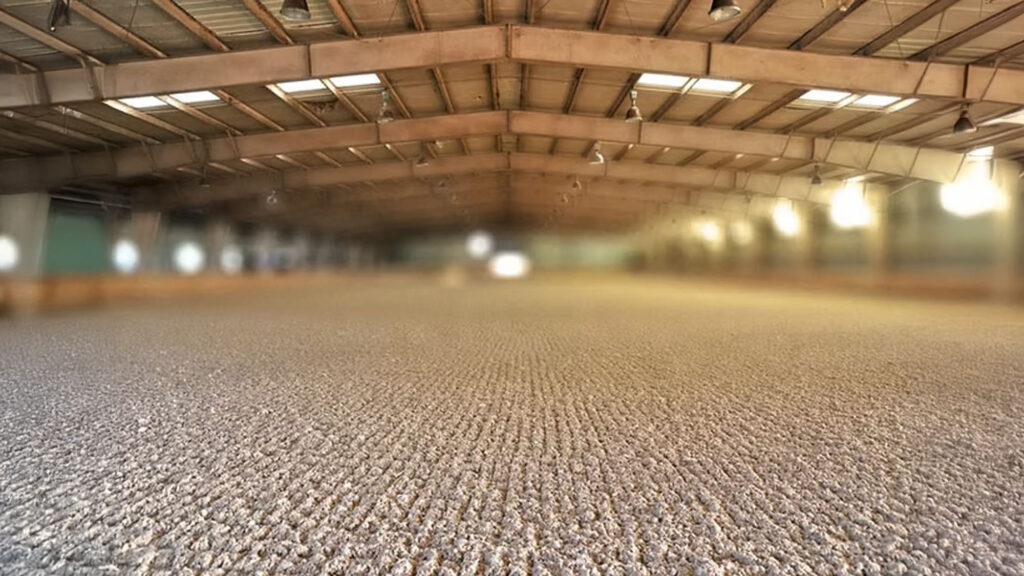
When riders describe great footing, “stable” is often the first word they use. But what does stability actually mean in an equestrian surface—and what creates that confident, secure feel under your horse’s hooves?
True footing stability goes beyond firmness. It’s the result of carefully balanced materials, proper installation, and consistent maintenance working together to support both horse and rider.
A stable arena surface provides reliable support without feeling hard or unforgiving. It allows the hoof to land, engage, and push off without excessive sinking or slipping.
This balance is critical. Too loose, and the footing becomes tiring and inconsistent. Too compact, and it increases concussion and limits performance. The goal is a surface that offers just enough “give” while maintaining structure.
Several components work together to produce a stable riding surface:
When one of these elements is off, riders often notice uneven spots, inconsistent traction, or a lack of confidence in movement.
While sand is a common foundation for arena footing, it doesn’t always provide lasting stability on its own. Over time, sand particles can separate, compact unevenly, or become too loose depending on moisture conditions.
This is where additives make a significant difference. Fiber-enhanced footing systems—like those used in GGT Footing—help bind sand particles together, creating a more cohesive and stable surface. The result is improved traction, reduced shifting, and a more consistent ride.
Even the best footing system won’t stay stable without proper care. Routine maintenance ensures that materials continue to perform as intended.
For example, a well-designed footing system that isn’t regularly groomed can quickly develop inconsistencies that affect stability.
Stable footing does more than improve performance—it builds trust. Riders can focus on their training, and horses can move freely without hesitation when the surface feels predictable and supportive.
By choosing quality materials, ensuring proper installation, and committing to regular maintenance, you create an arena surface that delivers stability ride after ride—no matter the discipline.