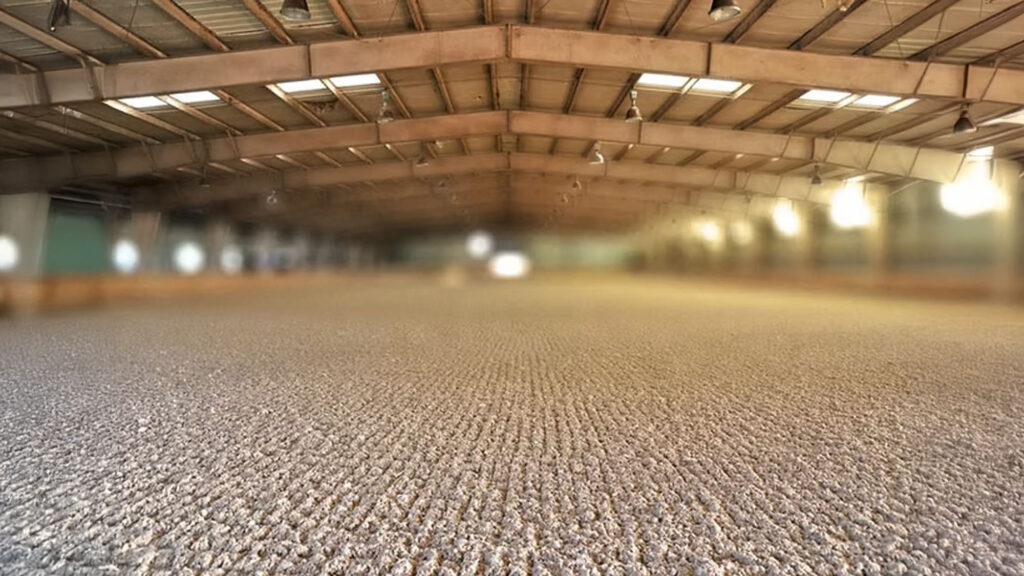
A safe riding surface supports the horse and rider through every transition, turn, landing, and stride. Whether an arena is used for flatwork, jumping, groundwork, lessons, or conditioning, the footing should provide consistent traction, appropriate cushioning, and dependable stability day after day.
Footing for horse arenas is not simply the material visible on top of the arena. It is a complete system that includes the base, drainage, footing blend, moisture management, and regular maintenance. When these components work together, they help create a surface that is comfortable for horses, predictable for riders, and durable enough for daily use.
Horses place substantial force on an arena surface during routine work. A horse’s feet must be able to land, load, break over, and push off without excessive slipping, sinking, concussion, or uneven resistance.
For daily training, safe footing should help support:
A surface that feels different from one end of the arena to another can interrupt training and cause riders to compensate. Over time, inconsistent footing may affect a horse’s comfort, willingness, and ability to perform confidently.
Safe equestrian footing is the result of balance. A surface should not be overly hard, excessively deep, too loose, or too compacted. Instead, it should create a consistent layer that supports the hoof while allowing the appropriate amount of give.
The base is the foundation beneath the footing layer. Even high-quality footing materials cannot perform as intended if the base is unstable, uneven, or unable to drain properly.
A well-constructed base helps:
Before selecting a top footing layer, arena owners should evaluate the existing base, climate, intended disciplines, and expected frequency of use. These factors all influence how the full footing system will perform.
Depth plays a major role in how footing feels under the horse. If it is too shallow, the surface may become firm and offer limited cushioning. If it is too deep, horses may work harder to move through it, particularly during turns and takeoff or landing efforts.
The ideal depth depends on the footing system, discipline, horse population, and maintenance routine. What matters most is consistency. Horses should not encounter a shallow, compacted area in one part of the arena and a deep, loose patch in another.
Regular grooming helps redistribute material and maintain a more uniform surface throughout the arena.
Traction is essential, but more grip is not always better. A safe arena surface should allow the hoof to engage with the footing without excessive slipping. At the same time, it should provide an appropriate slide so that the horse is not abruptly stopped by a surface with too much resistance.
The goal is controlled movement.
For example, when a horse turns on a circle, the footing should support the hoof rather than allow it to slide unpredictably. During a jump landing, the surface should offer stability while helping absorb impact. In dressage or flatwork, it should allow horses to move forward freely without feeling stuck.
Fiber-blended footing can help improve cohesion by helping sand particles work together, which supports a more stable and consistent riding surface when properly installed and maintained.
Everyday training involves repetitive concussion, especially during trotting, cantering, jumping, and schooling patterns. A footing system should provide cushioning that helps soften impact while still giving horses a supportive surface for push-off.
Footing that is too firm may feel hard on repeated work. Footing that is too soft may lack the stability horses need to travel efficiently. The best arena surfaces balance shock absorption with energy return and support.
That balance can be especially important for facilities that accommodate multiple horses, frequent lessons, or regular training sessions throughout the week.
Moisture affects nearly every characteristic of arena footing. A surface that is too dry may become loose, dusty, and inconsistent. A surface that holds too much water can become compacted, slippery, or uneven.
Drainage and watering work together to help maintain a dependable surface. A properly designed arena should move excess water away from the riding area while retaining enough moisture for the footing materials to perform effectively.
Consider local weather conditions when planning an arena footing system. In areas with frequent rain, drainage design is especially important. In hotter or drier climates, an efficient watering plan can help maintain dust control, traction, and surface consistency.
Even the best footing requires consistent care. Daily use, weather changes, horse traffic, and equipment can all affect the surface over time.
A practical arena maintenance routine may include:
Pay particular attention to areas that receive repeated traffic. Corners, jump landings, the centerline, rail tracks, and entrance areas can change more quickly than the rest of the arena.
Regular observation helps identify issues before they interfere with training. An arena may need grooming, watering, repairs, or professional evaluation if you notice:
Horses often provide useful feedback. Changes in stride, hesitation in corners, reduced confidence at fences, or unusual resistance can be signs that the footing should be assessed.
The safest footing solution depends on how the arena will be used. A private arena used for casual flatwork may have different needs than a busy boarding facility, a hunter/jumper training arena, or a dressage ring.
When evaluating footing for horse arenas, consider:
A footing professional can help assess these details and recommend a system designed around the needs of the facility rather than a one-size-fits-all approach.
Safe footing gives riders the confidence to focus on training and gives horses a more comfortable, consistent place to work. A stable base, balanced footing blend, effective moisture management, and routine maintenance all contribute to a surface that can support daily riding.
GGT Footing offers equestrian footing solutions designed to help create reliable, high-performing arena surfaces for a range of disciplines and facility needs. By selecting the right footing system and maintaining it consistently, arena owners can invest in safer, more productive training for years to come.