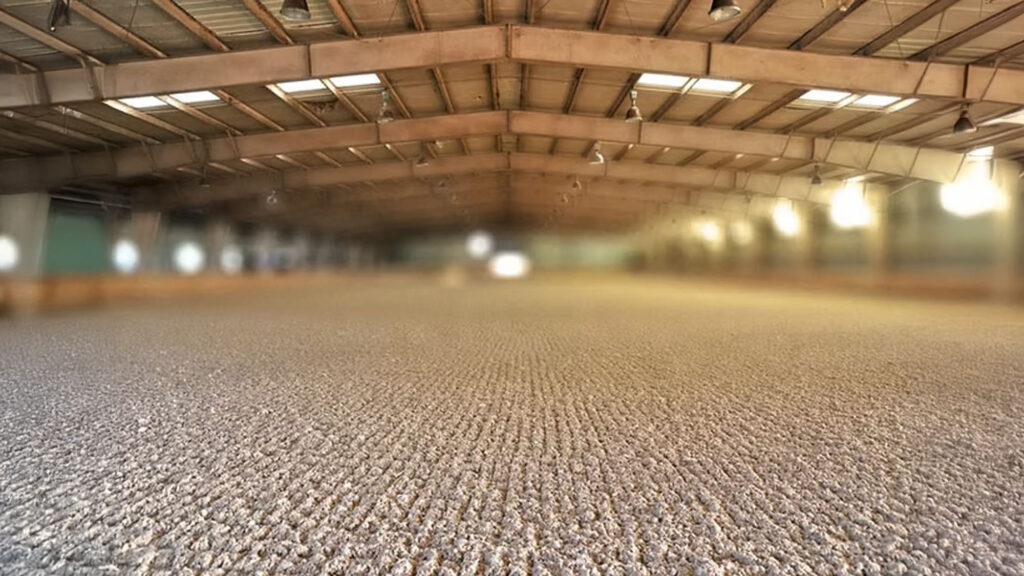
Installing a horse arena is a major investment, and the base plays a bigger role than many owners expect. While footing often gets the most attention, the layer underneath it can have just as much impact on performance, drainage, and long-term durability. That is why arena base mats have become an important part of many modern arena builds.
Before installation begins, it helps to understand how base mats work, what they can improve, and what your arena needs in order to get the best results. A well-planned base can help create a safer, more consistent, and more efficient riding surface.
The base is the foundation of the entire riding surface. If it is unstable, uneven, or unable to handle moisture properly, the footing above it will not perform as well as it should. Problems in the base can lead to soft spots, hard areas, poor drainage, and a surface that wears out too quickly.
Base mats are designed to help reduce those issues by creating a more stable layer under the footing. They can help support weight more evenly and protect the lower layers of the arena from excess compaction. In the long run, that can help improve ride quality and reduce maintenance headaches.
Arena base mats can add value in several ways, especially when they are part of a thoughtful arena design. One of the biggest benefits is improved stability. A more stable base helps the footing stay more consistent, even in arenas that see frequent use.
They can also support drainage and moisture management. In arenas where water tends to collect or the surface changes with the weather, base mats may help the footing perform more predictably. That can be especially helpful for outdoor arenas or facilities that ride year-round.
Another major advantage is longevity. When the base is better protected, the entire arena system often lasts longer and performs more reliably over time.
Before installing base mats, it is important to think about the full arena system, not just the mats themselves. The type of footing you plan to use, the condition of the sub-base, and the drainage design all matter. If these elements are not working together, the mats may not deliver the full benefit you expect.
Climate is another factor. Areas with heavy rain, freeze-thaw cycles, or high humidity may have different requirements than dry climates. The way your arena is used also matters. A high-traffic training facility may need a different setup than a private riding arena used a few times a week.
It is also worth considering long-term maintenance. Base mats can improve performance, but they still need to be paired with proper footing care, grooming, and moisture management to get the best results.
Base mats are most effective when they are matched with the right footing. A well-designed arena should function as a system, with each layer supporting the one above it. That means your footing, base, and maintenance routine should all be chosen with the same performance goals in mind.
For example, if you are using textile footing, the base should help support the structure and consistency of that surface. If you are using a blended footing, the base should help maintain even support and reduce uneven wear. The better the match between materials, the better the arena will perform.
A successful installation starts with a strong plan. Before the mats go in, the site should be prepared properly and evaluated for drainage, grading, and stability. Taking time on the front end can prevent bigger issues later.
It also helps to think about how the arena will be maintained after installation. Grooming equipment, watering practices, and footing depth all affect how the surface behaves. Planning for those details early makes it easier to get consistent results once the arena is in use.
Arena base mats can be a smart investment for owners who want better performance, improved stability, and a longer-lasting riding surface. But like any arena component, they work best when they are part of a complete plan. The base, footing, drainage, and maintenance routine all need to work together.
When those pieces are in sync, the result is a better ride and a better long-term outcome for your arena. That is the real value of starting with a strong foundation.