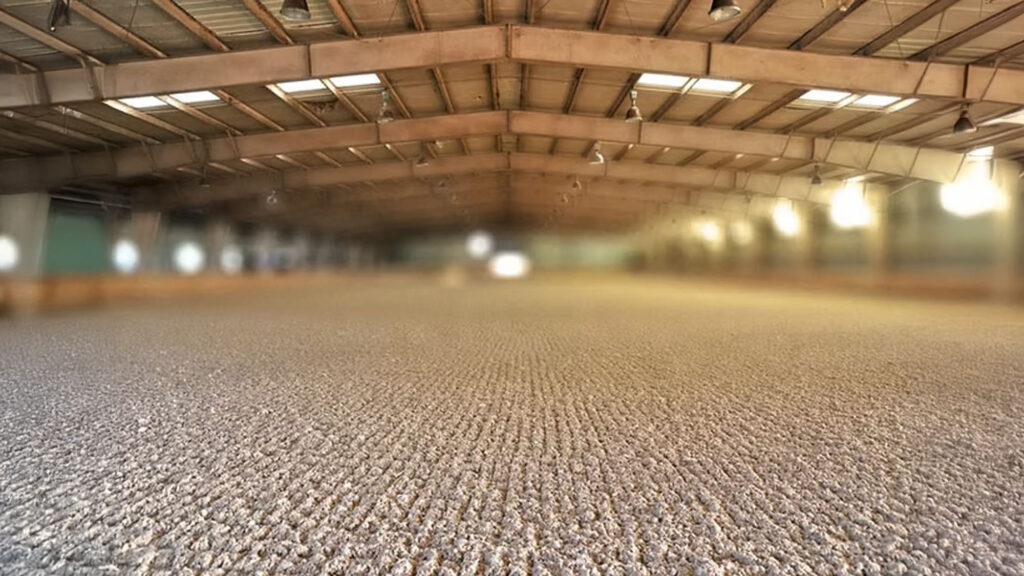
Most arena projects focus on the surface—sand, fibers, rubber, moisture control—but the real foundation of a world-class riding surface is buried underneath. Why your arena base matters as much as your footing is simple: without a stable, engineered base, even the best footing system will shift, pack, and break down over time.
Surfaces should be designed as complete systems. That means the base and the footing are engineered together, not chosen as separate items. Here’s why the base is critical and how it protects your footing investment for years.
When you ride, you feel the footing. But your horse also feels the base underneath.
A weak or poorly designed base leads to:
These are base issues, not surface issues. A strong, engineered base gives your footing a stable platform to perform consistently through seasons and heavy training loads.
An engineered arena base is designed with four goals:
When these are in place, your footing can do what it’s designed to do: provide stability, cushion, traction, and moisture control without being compromised by a shifting foundation.
A world-class arena base includes:
Without these, even premium footing materials will underperform.
A strong base:
The base is the guardrail that keeps your footing performing as designed for years instead of months.
These issues often show up over time as inconsistent rideability and higher maintenance.
Why your arena base matters as much as your footing isn’t a debate—it’s engineering. A stable, well-drained, uniformly compacted base is the foundation that allows your footing to perform as designed for years.
Without it, even the best sand, fibers, and additives will shift and break down. With it, your arena delivers consistent rideability, reduced maintenance, and long-term value.
If you’re planning a new arena or full surface upgrade, talk to GGT Footing about designing a base and footing system that work together for world-class, long-lasting performance.