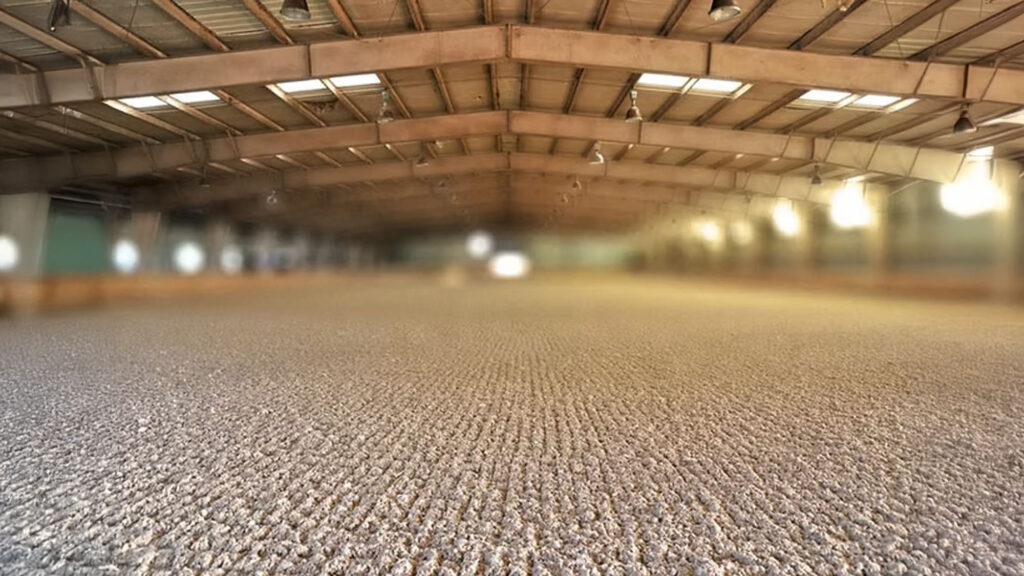
Arena footing is one of the most important parts of any equestrian facility, yet it is often one of the least understood. Riders may notice when a surface feels too hard, too deep, dusty, or uneven, but the reason behind that performance usually comes down to how the footing is built. The materials, layers, and overall structure all work together to determine how the arena rides.
A well-designed footing system does more than create a comfortable surface. It supports traction, cushion, stability, drainage, and long-term consistency. Understanding how arena footing works can help horse owners, trainers, and facility managers make better decisions when building, renovating, or maintaining an arena.
Arena footing is not just the top material a horse travels on. It is a system made up of multiple layers that all contribute to how the surface performs. The base, the footing material, and any additives or stabilizing components each play a role in creating the final ride experience.
When these layers are properly designed and maintained, the arena can provide a surface that is more supportive, more consistent, and safer for everyday use. When one part of the system is out of balance, the entire arena can feel off. That is why footing should always be viewed as a complete structure rather than a single product.
The base is the foundation of the arena and one of the most important parts of the overall footing system. A properly built base helps with drainage, stability, and long-term surface performance. Without a strong base, even high-quality footing materials can struggle to perform as intended.
If the base is uneven, compacted poorly, or holding water, problems will often show up in the riding surface above. Horses may encounter hard spots, soft areas, or inconsistent support. A strong base helps prevent those issues and gives the top layers a better foundation to work from.
The top layer is what riders feel most directly, so the material selection matters a great deal. Sand is commonly used because it offers structure and traction, while additional fibers or stabilizing components can improve cohesion, cushioning, and consistency. The right mix depends on the goals of the facility and the type of riding it supports.
Some arenas need a firmer surface with more stability. Others require more cushion or more grip. The best footing material is the one that matches the arena’s use, climate, and maintenance capabilities while still providing a predictable and comfortable ride.
Each layer in an arena footing system serves a specific purpose. The base supports drainage and structural integrity. The footing material provides the rideable surface. Additives or stabilizers help fine-tune performance by improving binding, moisture retention, or durability.
When all of the layers work together, the arena performs more consistently. Horses can move with greater confidence because the surface feels more uniform from one section to another. If one layer is too soft, too hard, or too thin, the surface may not deliver the intended results.
The best arena footing is not necessarily the softest or deepest. It is the one that behaves consistently across the entire arena. Consistency matters because horses depend on predictable footing to maintain balance, rhythm, and confidence. Riders also benefit from a surface that feels uniform from corner to corner.
A consistent footing system helps reduce the risk of slipping, stumbling, or uneven strain. It also makes the arena more reliable for daily training, lessons, or competition. That is why performance is about more than comfort — it is about how the surface supports horse and rider every step of the way.
Moisture is one of the biggest factors in footing performance. Too much water can make the surface heavy or unstable. Too little can create dust, loosen the footing, and reduce traction. The right moisture balance helps the footing hold together while still remaining responsive under hoof.
Different arenas manage moisture in different ways depending on climate, drainage, and footing type. Some surfaces hold water better than others, while some need regular watering to maintain ideal conditions. Understanding how moisture interacts with the footing layers is essential for keeping the arena in good condition.
Even the best-built arena footing needs regular maintenance to stay effective. Grooming helps redistribute material, break up compacted areas, and maintain a more even surface. Monitoring depth and moisture helps prevent the footing from becoming too shallow, too loose, or too hard in specific areas.
Maintenance also helps extend the life of the footing investment. Over time, traffic, weather, and use patterns can change how the surface behaves. A strong maintenance routine keeps the layers working together the way they should so the arena continues to perform well. Learn more about how professionals maintain their arenas here.
When evaluating arena footing, it helps to look beyond the surface layer and ask how the full system is designed. A good footing system should support drainage, provide the right amount of stability, and fit the needs of the horses and disciplines using the arena. It should also be manageable for the people responsible for daily care.
The best choice often depends on the facility’s goals. Some barns want a surface built for heavy use. Others need a more specialized feel for training or competition. Either way, the most successful footing systems are the ones built with the entire arena in mind.
Arena footing is a combination of materials, layers, and performance decisions that all affect how the surface rides. When the base is strong, the materials are well matched, and the maintenance plan is consistent, the result is a better arena experience for both horse and rider.
At GGT Footing, we know that great footing starts from the ground up. The right system can improve safety, support performance, and help create a surface that holds up to daily use over time. Ready to build a footing system that performs from the base up? Request a quote today and let GGT Footing help you create a better arena surface for your horses and riders.