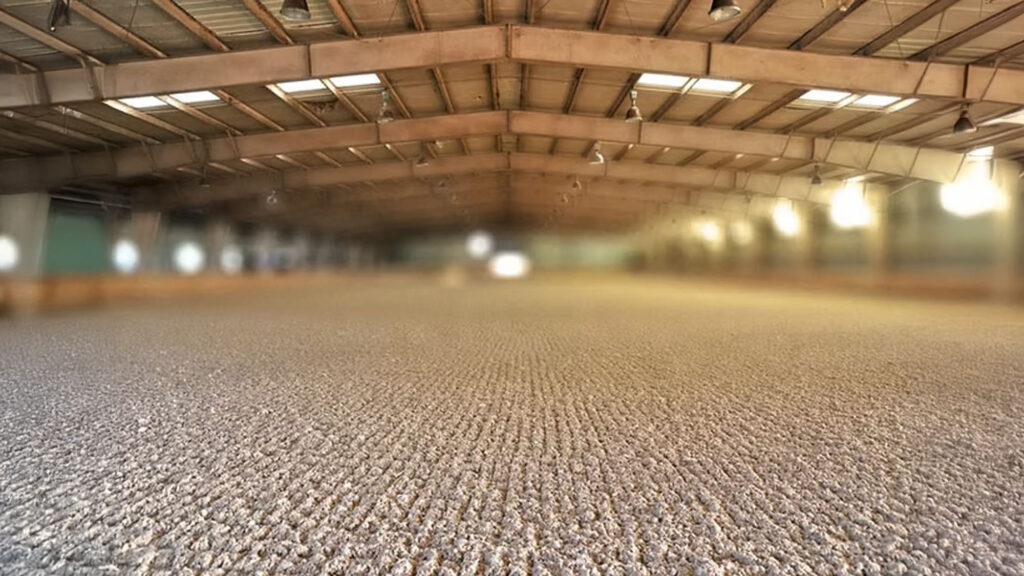
A truly rideable arena is one that performs through changing weather, not just during ideal conditions. Rain, heat, freezing temperatures, and seasonal shifts all affect how a horse arena surface behaves, which means year-round rideability depends on more than just a good layer of footing. It takes a thoughtful system that supports consistency, drainage, moisture balance, and long-term durability.
For riders and facility owners, an all-weather arena is about reliability. When the surface stays usable across seasons, training stays more consistent and horses can keep working without constant interruptions. That kind of performance does not happen by accident — it comes from the right footing, the right base, and the right maintenance habits working together.
An all-weather arena is designed to handle a wider range of conditions than a basic riding surface. It needs to remain stable in wet weather, resist becoming overly hard in dry conditions, and continue supporting safe movement as temperatures change. In other words, the footing has to adapt without losing its structure.
The foundation plays a major role here. A properly prepared base helps water move away from the surface instead of pooling in it. On top of that, the footing material needs to hold up to repeated use while still offering the balance, cushion, and traction horses need.
If an arena cannot manage water well, it will struggle to stay rideable year-round. Poor drainage can leave the surface too soft after storms, create uneven footing, and shorten the life of the arena overall. That is why drainage is one of the first things to get right in all-weather arena design.
A good drainage plan helps protect the footing from water-related damage and keeps the surface more predictable after changing weather. It also reduces downtime, which is especially valuable for barns and facilities with regular training schedules. When water has somewhere to go, the arena has a much better chance of staying useful. Read more in-depth about arena bases and proper drainage here.
All-weather performance depends on consistency in the footing itself. If the material shifts too much, separates easily, or compacts unevenly, the arena will feel different from one day to the next. That can affect both rider confidence and horse comfort.
The goal is to create a surface that holds together while still moving naturally underfoot. The right footing should support traction, cushion, and balance without becoming unstable. When those qualities stay consistent, the arena becomes more dependable in every season.
Moisture is one of the biggest factors in all-weather rideability. Too little moisture can make footing dusty, loose, or hard-packed. Too much moisture can make it heavy, sticky, or uneven. The ideal surface stays in the middle, where it remains workable and supportive.
That balance is easier to maintain when footing and base are designed to work together. Regular watering, weather monitoring, and grooming all help preserve the surface, but the material itself also has to support moisture retention and distribution. An arena that manages moisture well is usually easier to ride in throughout the year.
Even the best all-weather arena still needs regular care. Grooming should be done with the surface in mind, not just to make it look smooth. Overworking the footing can change how it performs, while neglect allows wear patterns and compaction to build up over time.
A smart maintenance routine helps extend the life of the arena and keeps performance more even across the surface. That includes watching high-traffic areas, checking moisture levels, and making small adjustments before problems grow. The more consistent the maintenance, the more consistent the ride.
An all-weather arena is an investment in usability, safety, and performance. When the footing system is planned well from the start, it can reduce weather-related disruptions and create a more reliable surface for daily riding. That kind of dependability is especially valuable for facilities that train year-round.
At GGT Footing, we know that year-round rideability starts with the right footing solution. A surface that performs well in changing conditions does more than support horses — it supports the entire rhythm of a barn or facility. When the arena is built to handle the seasons, riding can keep moving forward no matter what the weather brings.
Ready to upgrade your horse arena footing? Start your quote today!