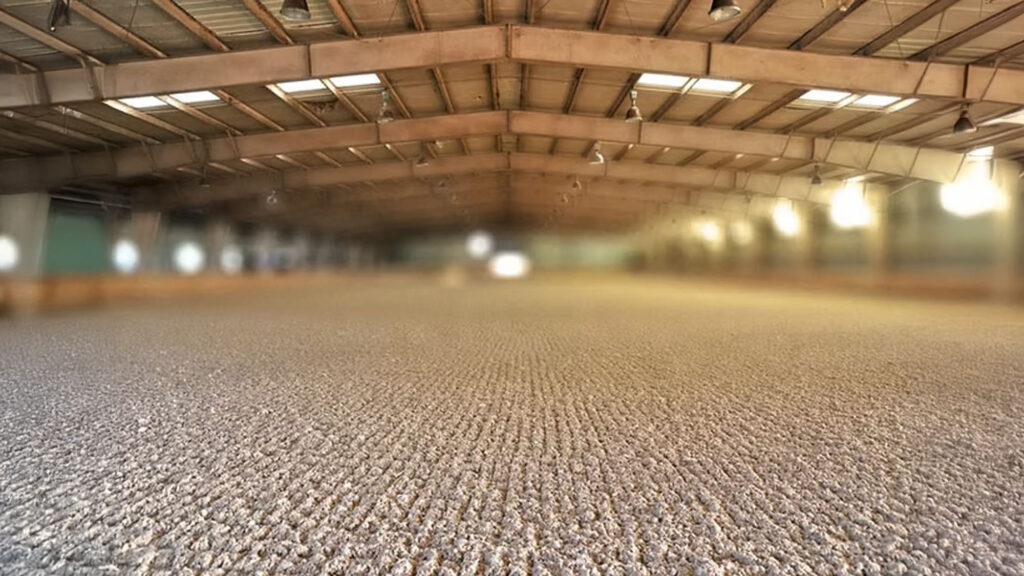
A horse arena that feels dusty, deep, hard, uneven, or inconsistent does not always need a complete rebuild. In many cases, targeted maintenance changes and the right footing additive can improve rideability, stability, and longevity while helping you avoid the cost and downtime of starting over.
The key is identifying what is causing the issue before adding more material or changing your routine. Existing arenas can often be improved by evaluating the sand, correcting footing depth, refining moisture management, adjusting grooming practices, and incorporating compatible textile additives. GGT Footing specializes in fiber-based footing systems designed to help enhance sand footing performance without requiring a full arena replacement.
Before making changes, take time to evaluate how your arena currently performs. The symptoms you see on the surface can help identify where to begin.
For example, dusty footing may point to inconsistent moisture management or sand that is struggling to hold together. Hard spots may indicate compaction, shallow footing, or base issues. If the arena feels deep or loose, the footing depth may be excessive, uneven, or in need of improved stabilization.
Walk the arena and check for:
A clear understanding of the problem helps you make improvements that address the cause instead of simply masking the symptom.
Uneven footing depth is one of the most common issues in established arenas. Footing naturally migrates with riding and grooming, often building up along the rail, in corners, or near jump approaches.
Too much footing can make the surface feel deep and tiring, while too little footing can expose a hard surface below. Restoring a consistent depth can often improve how an arena rides without requiring new footing throughout the entire space.
Use a depth gauge or measure several areas of the arena regularly. Pay particular attention to high-use tracks, corners, and the centerline. Then adjust your drag pattern to redistribute material rather than continually moving it toward the edges.
Frequent, lighter maintenance is often more effective than occasional aggressive grooming. For practical grooming ideas, read GGT Footing’s article on quick horse arena drag maintenance.
Moisture has a major influence on traction, cushion, dust control, and surface stability. Sand that becomes overly dry can feel loose and dusty, while too much water can create a heavy or unstable surface.
Instead of relying on occasional heavy watering, aim for a consistent routine that matches your climate, arena location, and level of use. Outdoor arenas may need more frequent attention during hot, dry weather, while indoor arenas benefit from irrigation that reaches the entire surface evenly.
Monitor the arena after watering and riding. If some areas dry much faster than others, adjust sprinkler coverage or watering time to improve consistency. Maintaining proper moisture can also help fiber-blended footing perform as intended by supporting cohesion between the sand and textile materials.
For warm-weather guidance, visit Summer Maintenance Tips for Horse Arena Footing That Lasts.
Dragging is essential, but more aggressive grooming is not always better. Dragging too deeply can disturb the base, pull footing out of place, and create uneven material distribution. It can also overwork certain footing blends.
Set your drag to work within the footing layer, not into the base. Use a consistent pattern, but alternate your direction and route regularly so the same tracks do not receive all the attention.
A better grooming routine can help:
The correct drag settings depend on your footing type, depth, and arena construction.
If your sand footing is still structurally sound but lacks stability, cushion, or moisture retention, adding a compatible fiber blend may be a practical upgrade. GGT Footing textile fibers are designed to be mixed into compatible sand to help create a more stable, supportive, and resilient riding surface.
When properly blended, fiber helps the sand particles work together rather than shifting excessively under hoof impact. This can improve footing stability while maintaining the surface’s ability to provide cushion and traction.
Adding fiber to an existing arena may help address:
GGT Footing blends are engineered to improve stability, cushion, and moisture retention when paired with suitable sand. Existing arenas with performance issues can often be improved through compatible textiles, corrected footing depth, and better grooming practices rather than a full rebuild.
Before adding any additive, assess the quality and compatibility of the existing sand. The right fiber blend, application rate, and installation process will depend on the sand, your riding discipline, local weather conditions, and how frequently the arena is used.
A full rebuild may become necessary if the base has significant drainage failure, severe deterioration, or major structural issues. However, many arena concerns can be managed by protecting the existing base from further damage.
Avoid dragging too deeply, especially when the surface is wet. Repeatedly cutting into the base can cause contamination between the footing and base layers, creating inconsistent performance and expensive repairs.
Watch for signs that may require a more detailed base inspection:
Addressing drainage and edge maintenance early can help preserve your base and keep your surface performing more consistently. GGT Footing recommends periodically inspecting the base, edges, and high-traffic zones to protect the foundation beneath the footing.
Build a Practical Maintenance Plan
The best maintenance routine is one that fits your arena’s real-world use. A busy training facility may need daily grooming and watering, while a private arena with lighter traffic may require a less frequent schedule.
Create a simple plan based on your arena’s needs:
Improving horse arena footing does not have to mean tearing out what you already have. With a careful assessment, consistent maintenance, and the right additive solution, you can refresh an existing surface and create a more dependable ride for horses and riders.